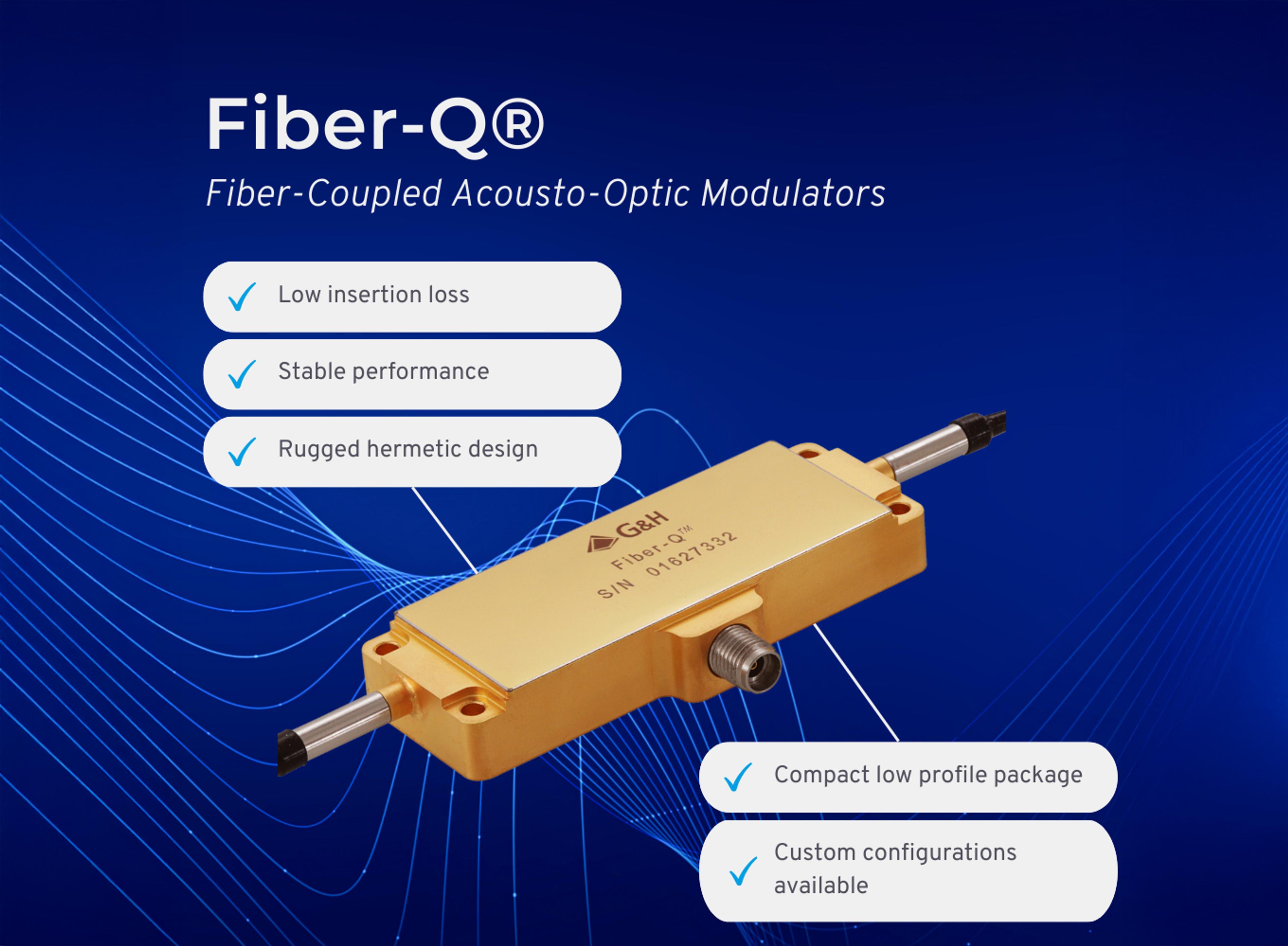
©️ G&H Manufacturing of Fiber-Q® in Torquay, UK
5 Extreme Challenges Hermetic Packaging Overcomes in Photonics
G&H (LON: GHH), hermetic photonics packaging supports mission-critical systems in the harshest conditions. It’s not uncommon to find photonics in the most inhospitable and challenging environments. As part of the subsea telecommunications network, photonics technology keeps the world connected deep under the ocean. It operates in freezing terrain, where vital pipelines supply energy to power our cities. In the desert, it may be used as part of the imaging system of an armored fighting vehicle, whose crew must make split-second decisions.
That's just here on earth - in space, photonics is increasingly utilized in navigation, remote sensing and space communications, as well as scientific exploration missions. Whether in low Earth orbit (LEO) or in the outer solar system, the environmental challenges reach another level of extreme in space.
Maintaining the peak performance and reliability of technology in harsh environments is a commercial imperative. Repair or replacement is either costly or impractical. Therefore, hermetic sealing or hermetic packaging is an essential element in the overall design of effective photonics solutions for challenging environments.
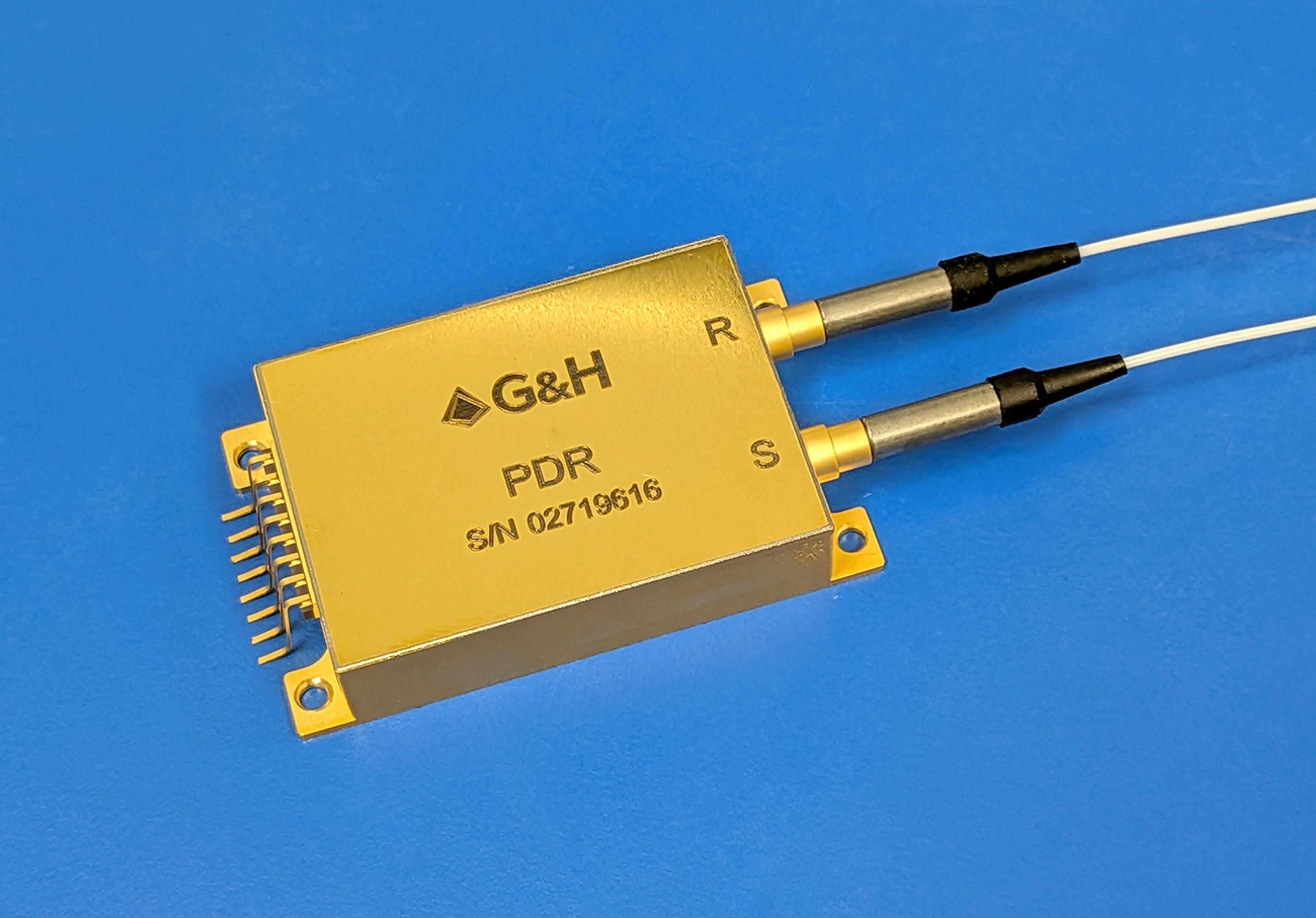 ©️ G&H
Why harsh-environment photonics needs hermetic packaging
Hermetic packaging is widely used across industries to create airtight or watertight seals for sensitive technology. In photonics, the challenge is more complex: you often need to protect optoelectronics and precision optics from the environment while still enabling optical transmission, fiber routing, and sometimes RF/electrical connectivity.
As a starting point, there are five hazards to consider when designing photonics for extreme environments.
1) Temperature: wide operating ranges and thermal cycling
Industrial equipment is often designed around typical operating ranges (commonly cited as -40 to 85°C), but harsh environments can stretch well beyond that, whether it’s freezing conditions, desert heat, or rapid transitions between extremes.
Space adds another dimension. Depending on thermal design, orbit and exposure, hardware may experience severe thermal gradients and repeated cycling over long periods. These temperature stresses can impact alignment stability, material interfaces, seal integrity and component ageing.
How hermetic packaging helps:
A well-designed hermetic package supports stability by controlling internal conditions and protecting sensitive interfaces from external thermal and environmental influences. Material selection, mechanical design, and joining methods all matter when the goal is long-life performance across repeated thermal cycles.
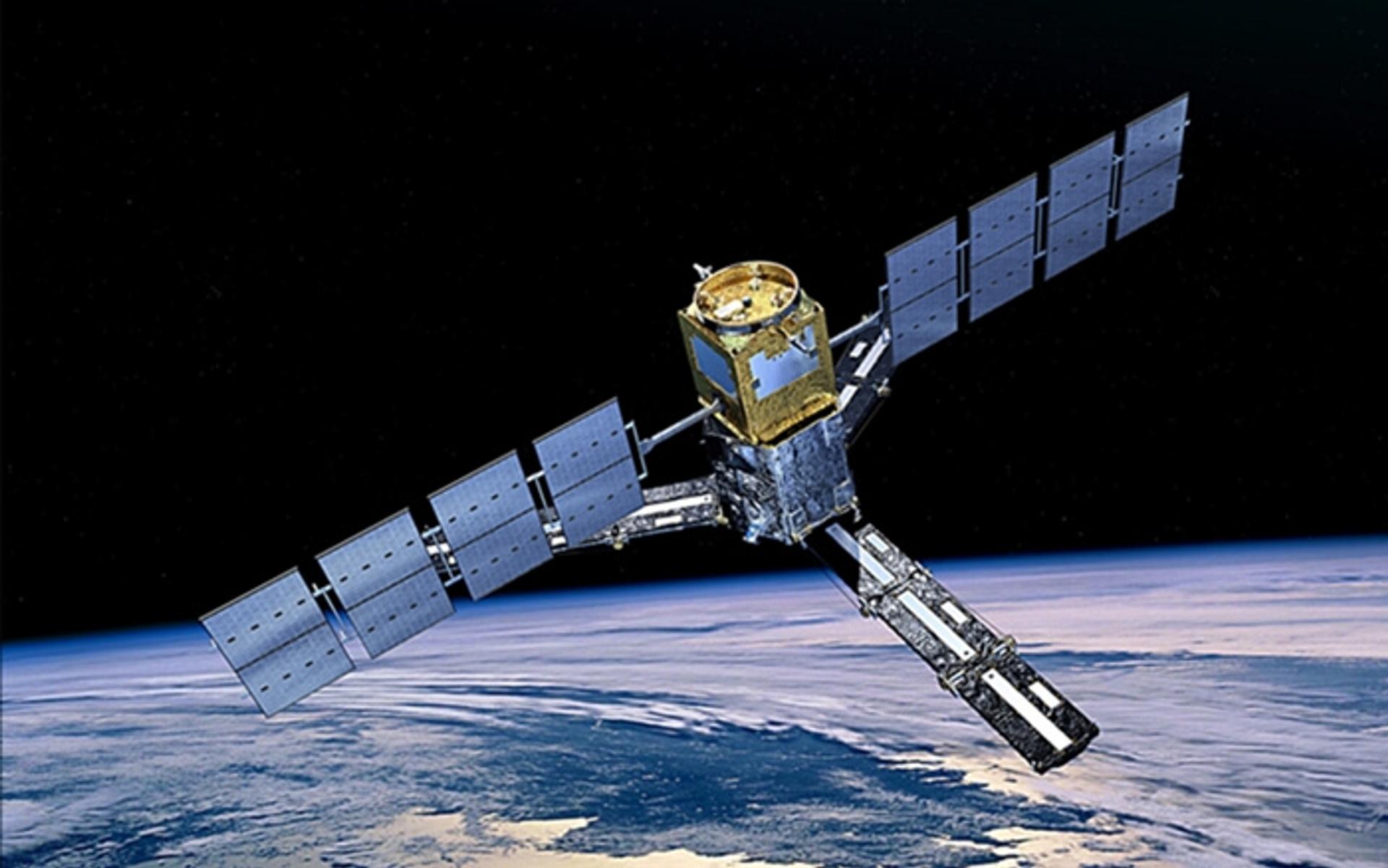 SMOS satellite. Image courtesy of ESA.©️ ESA
2) Moisture: corrosion, fogging, and long-term degradation
Moisture can be a slow-acting failure mechanism, particularly where salt fog, tropical humidity, condensation or freeze-thaw cycles are involved. Even tiny levels of water vapor in an enclosure can degrade optoelectronic performance over time, encourage corrosion, and reduce operational life.
How hermetic packaging helps:
Hermetic sealing significantly reduces ingress risk, provided the internal environment is properly prepared. Total removal of moisture and water vapor prior to sealing is essential, and verification testing is a key part of any robust packaging approach.
3) Radiation: performance degradation in space
Radiation is a major consideration for space photonics. Different orbits expose hardware to varying mixes of electrons, protons and heavier ions. Radiation effects can degrade optoelectronic components and materials, ultimately affecting signal quality, stability and lifetime.
How hermetic packaging helps:
While hermetic sealing isn’t a “radiation shield” on its own, robust packaging practices reduce secondary risks such as contamination, moisture-driven degradation and outgassing deposits, helping maintain stable operation for sensitive photonics assemblies in space-grade environments.
4) Gases and outgassing: contamination from unexpected sources
Hermetic packaging isn’t only about keeping outside air out. Over time, unwanted gases can be generated inside a sealed enclosure from trace organics in adhesives, lubricants, sealants, labels, or residues left from handling and assembly. In optical systems, even minor contamination can affect performance.
In space particularly, low outgassing is critical to prevent contamination of instrumentation and optical surfaces.
How hermetic packaging helps:
Hermetic packages can be designed and built with process controls that minimize organic content and manage internal atmosphere. This helps protect optical surfaces, maintain stable device behavior, and reduce contamination risk over long deployments.
5) Physical stress: shock, vibration, pressure and handling loads
Harsh environments often include shock and vibration (launch, transport, vehicle operation), pressure (subsea), and rugged handling conditions. These can disrupt alignment, compromise seals, fatigue joints, and damage delicate internal structures.
How hermetic packaging helps:
Hermetic packaging for harsh conditions is typically ruggedized -designed to be hardwearing and shock-resistant, so the package supports both environmental protection and mechanical survivability.
 ©️ G&H
Best practice in photonics hermetic packaging
Overcoming these challenges requires sophisticated processes, tight control, and verification at each stage. Drawing on G&H’s long-standing experience collaborating with customers to develop robust solutions for defense, space and industrial applications, here are practical best-practice methods that help optimize hermetic, ruggedized packaging:
- Controlled internal atmosphere: sealing optoelectronic chips in a precisely controlled mixture of gases to minimize ageing and degradation
- Robust materials and ultra-low leak rates: selecting strong package materials and finishes where needed, with extremely low leak rates
- Minimized organic contamination: using approaches such as laser marking/etching for identification to reduce organic material sources
- Connector and feedthrough integrity checks: methods such as inverted leak checks on RF connectors and fiber tubes to confirm sealing performance
- Moisture removal protocols: extensive vacuum bake (vac bake) and related process steps to reduce residual moisture, including the use of getters where appropriate
- Pre-seal verification: lid condition dry air tests and other checks prior to final seal
- Environmental validation: dew point testing at temperature extremes to measure response to external moisture
- Seal robustness testing: seam seal resistance weld tests to demonstrate package strength
- Leak testing: gross and fine leak checks to verify hermetic performance
 ©️ G&H Fiber-Q®
Packaging isn’t an afterthought - it’s a performance enabler
In harsh environments, hermetic packaging can be the difference between reliable operation and premature failure. It protects sensitive photonics, maintains stability over time, and supports operation in conditions where repair or replacement is either prohibitively expensive or impossible.
As photonics moves into more demanding applications, from subsea networks and rugged defense platforms to next-generation space missions, how well the technology performs at extremes may become a defining attribute.
Talk to G&H if you’re designing photonics for harsh environments and need guidance on hermetic packaging, ruggedization, and reliability-focused manufacturing practices.
G&H Fiber Optic Solutions
G&H active and passive fiber optic components and modules offer the performance and reliability required for some of the most demanding and challenging applications in the world.