Laser-based Semiconductor Manufacturing
Laser processing is driving a revolution in semiconductor manufacturing, enabling smaller, thinner technology.
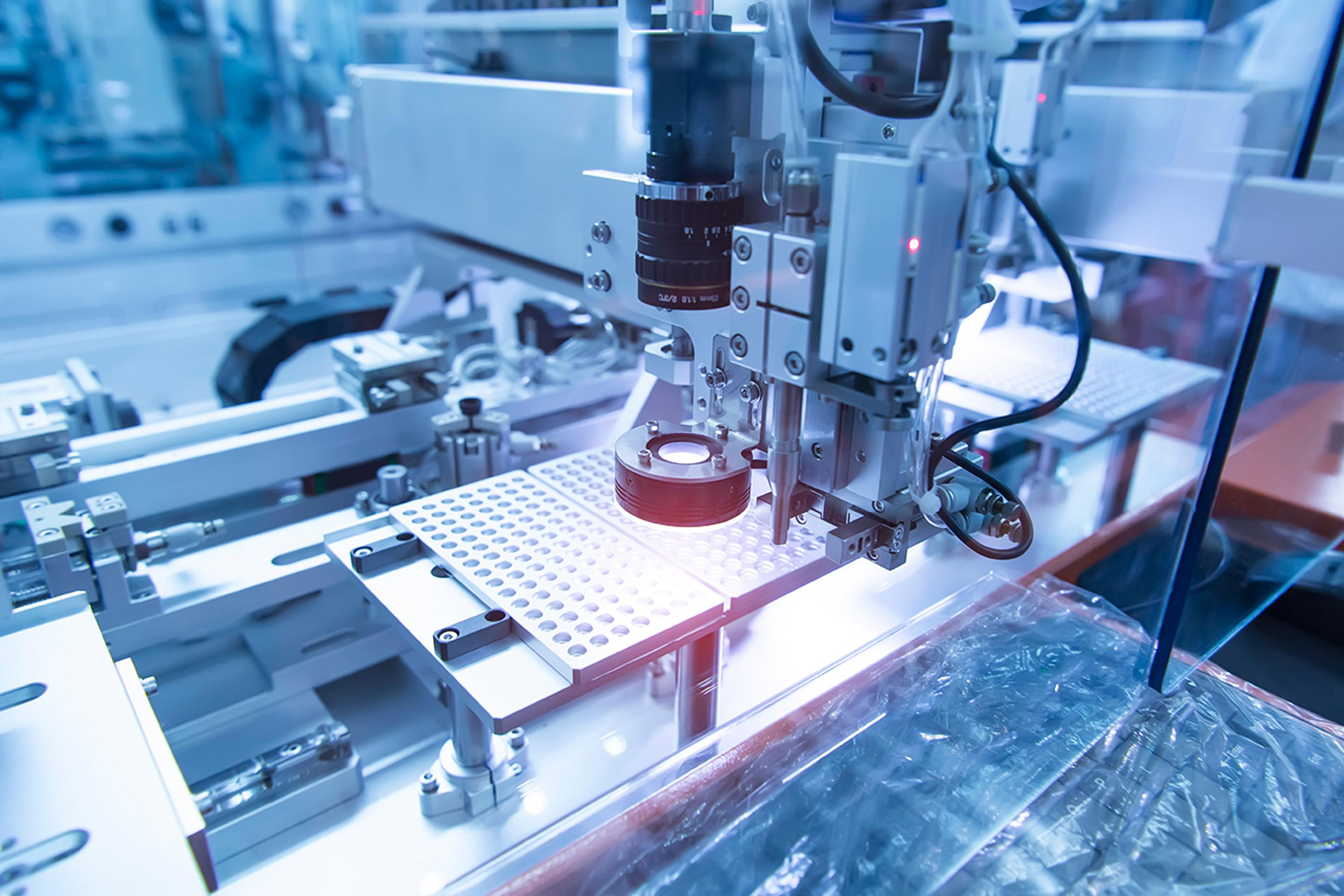
Laser-based processes such as micromachining, via drilling, scribing, marking, and thin-film processing rely on the precise interaction between light and matter. Achieving repeatable results at micron and sub-micron scales requires more than raw laser power, it demands exceptional control over beam quality, timing, polarization, and stability.
Photonic technologies enable this control by:
These capabilities are critical across a wide range of materials, including semiconductors, ceramics, metals, and advanced composites commonly used in microelectronic devices.
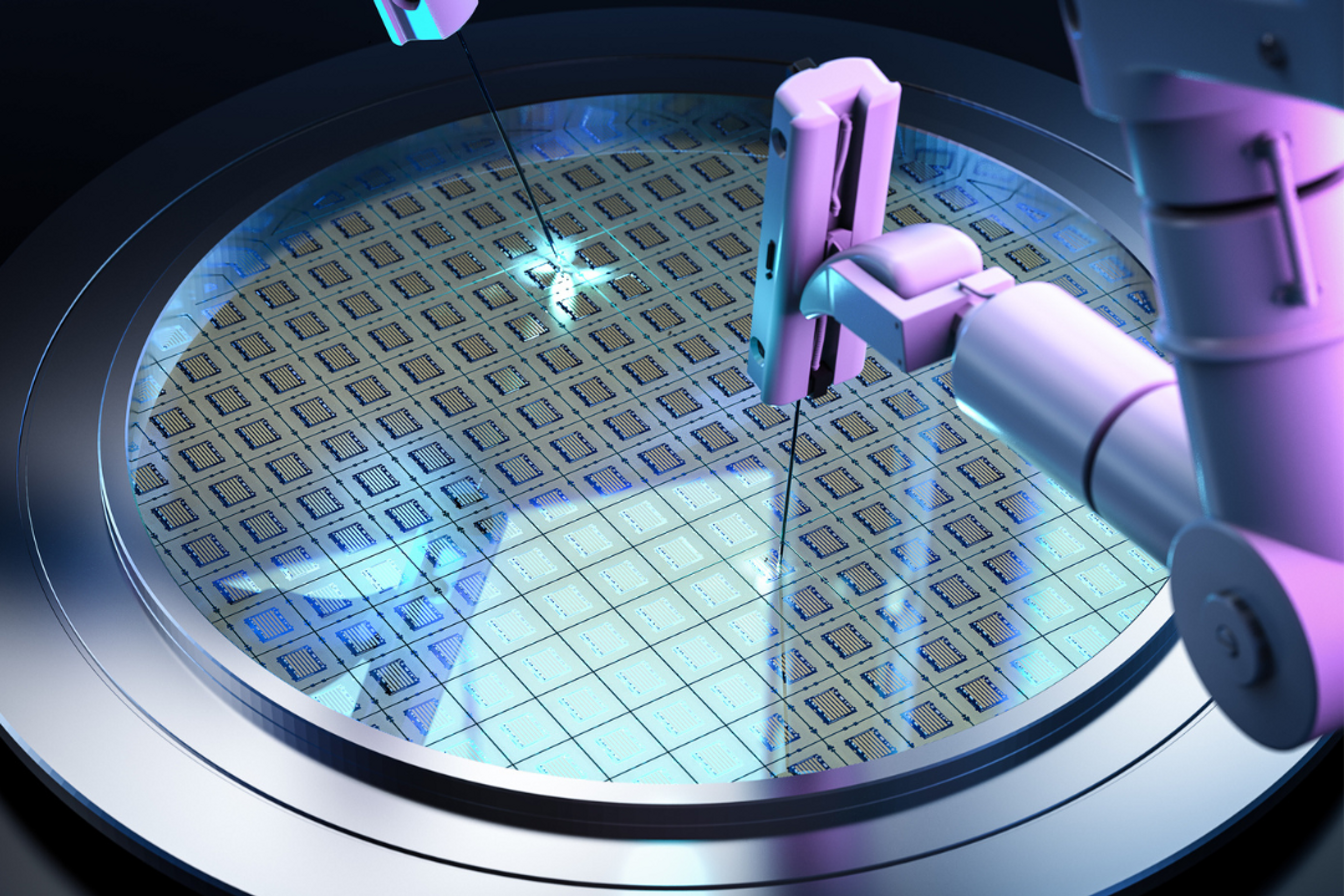
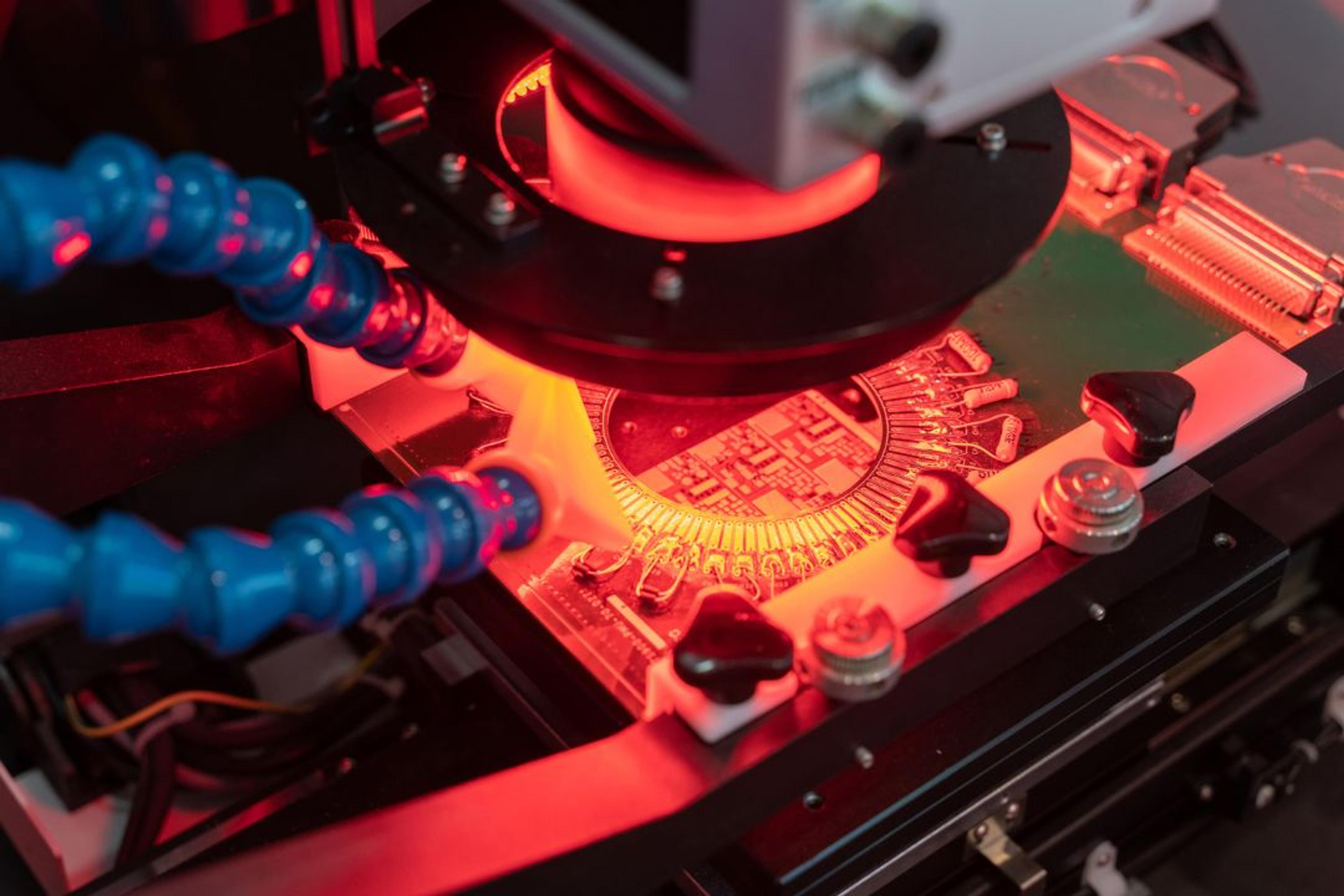 ©️ Semiconductor board detection process with laser detector
As microelectronic manufacturing scales, the industry is moving beyond discrete components toward highly integrated laser subsystems. Applications such as MEMS fabrication and advanced IC manufacturing require:
In this environment, photonic components must operate reliably under demanding conditions - often at the limits of optical power, speed, and precision.
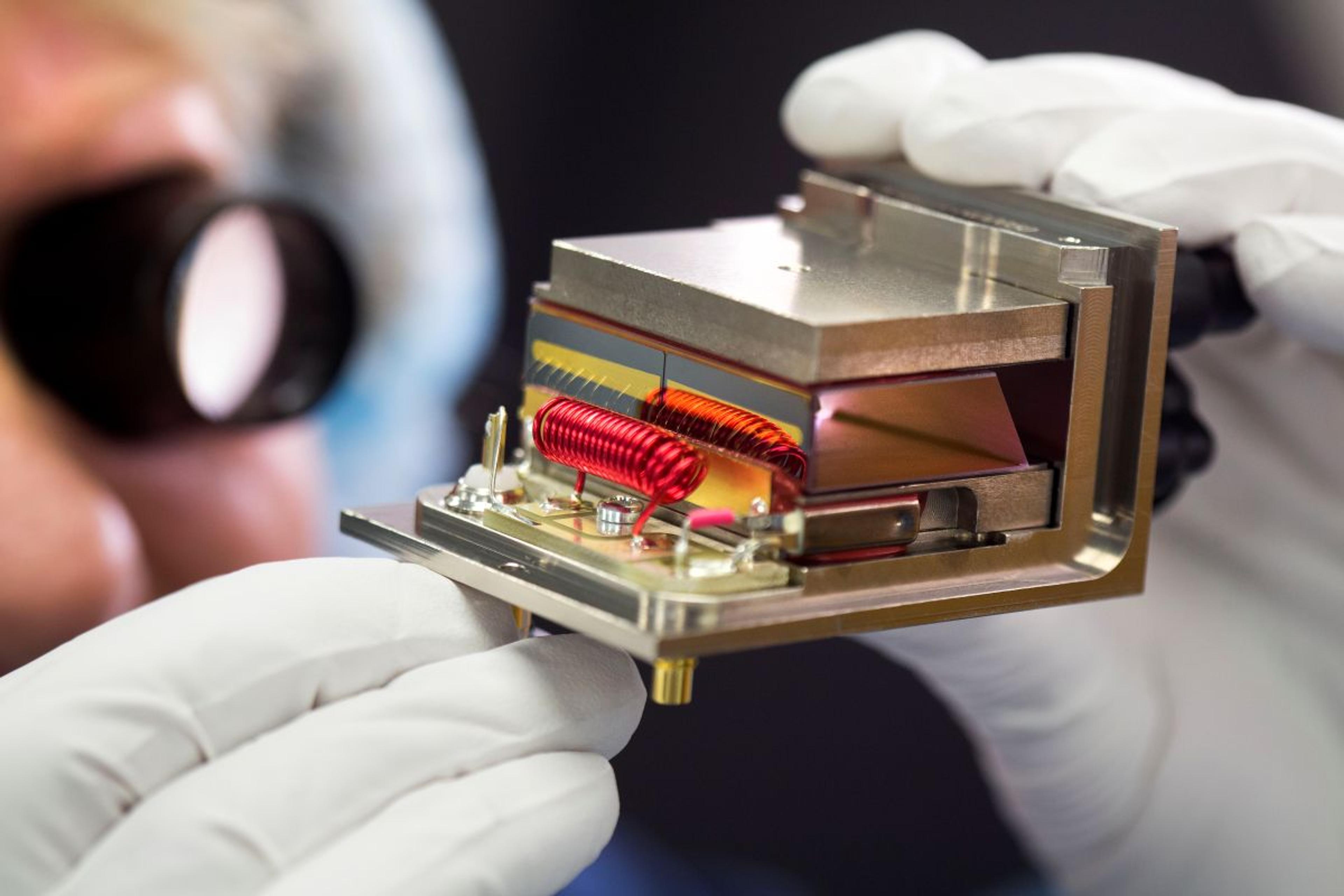
 ©️ G&H acousto-optic photonics assemblies
To support modern laser-based microelectronic manufacturing, photonic components must deliver on several fronts:
High-Power Handling and Low Loss
As laser power increases, even small optical losses can translate into thermal stress, beam distortion, or component failure. High-quality, low-loss photonic components are essential to preserve beam integrity and protect downstream optics.
High-Speed Modulation and Switching
Higher throughput demands faster modulation. Acousto-optic and electro-optic devices must operate at increasingly high frequencies to match ultrafast laser pulse rates without compromising accuracy or repeatability.
Precision and Repeatability
Consistent process outcomes depend on precise control of laser timing and positioning. Photonic components must enable repeatable performance over long production lifetimes.
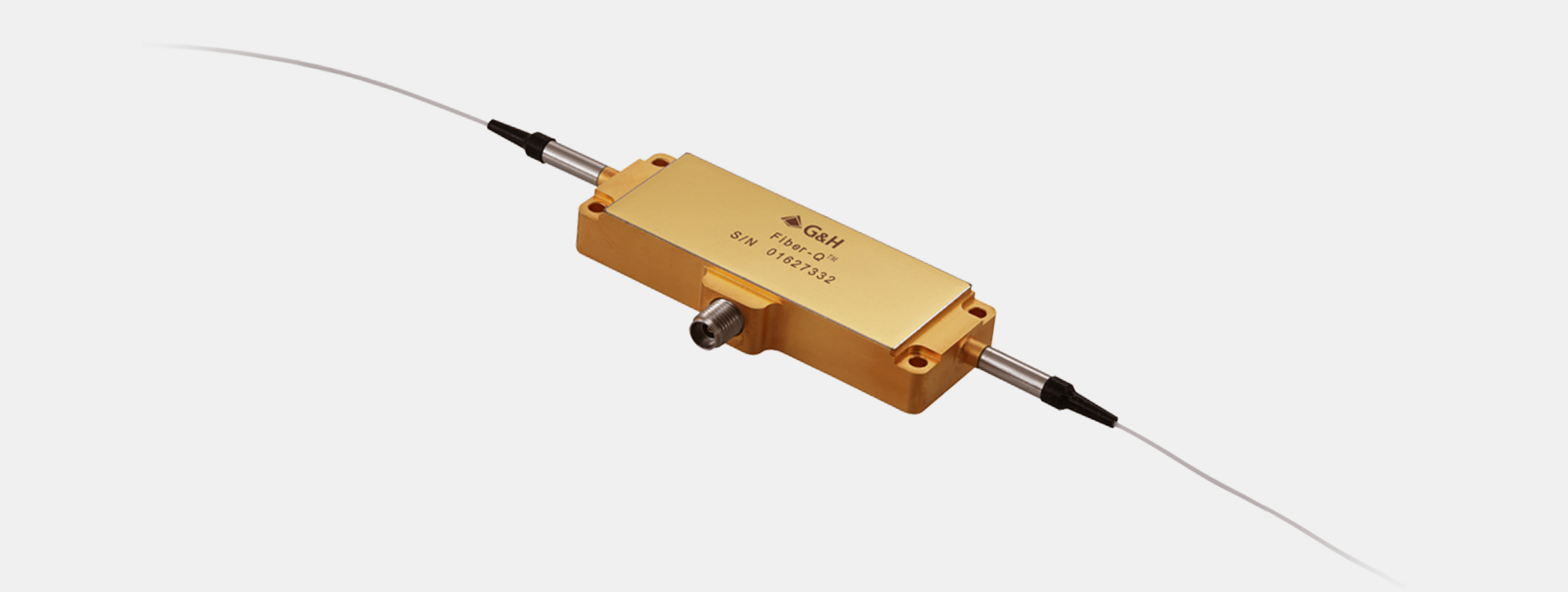
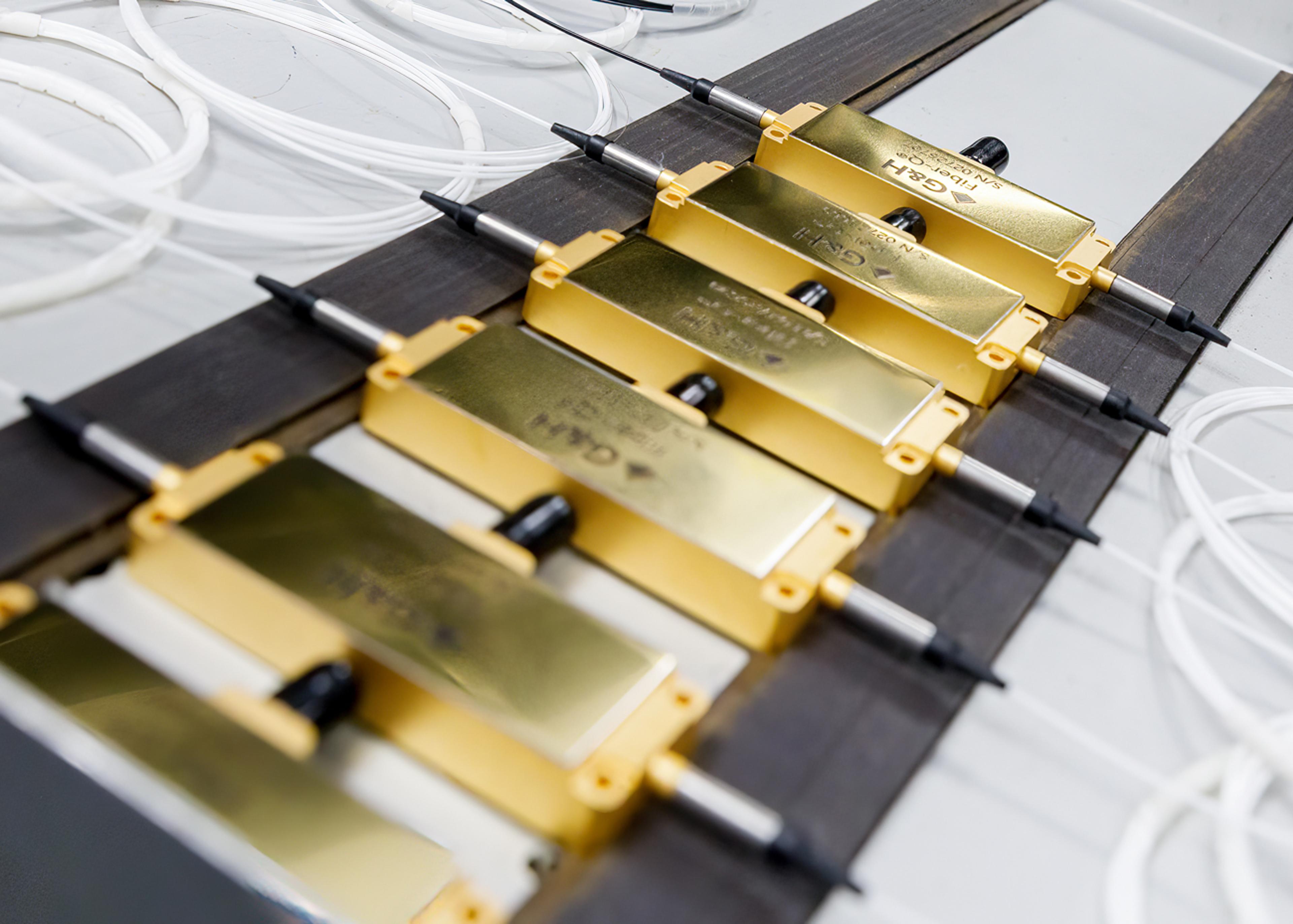 ©️ G&H Fiber-Q®
G&H brings decades of experience in designing and manufacturing photonic components for high-power, high-reliability industrial laser systems. This expertise is directly applicable to the evolving demands of laser-based microelectronic manufacturing.
By combining deep materials knowledge, precision manufacturing, and rigorous process control, G&H delivers photonic solutions that support:
A clear example of this capability is Fiber-Q®, G&H’s fiber-coupled acousto-optic modulator (FCAOM) platform designed for industrial laser applications.
Fiber-Q enables fast, efficient switching and modulation of ultrafast laser beams - capabilities that are critical for high-throughput micromachining and precision manufacturing tasks. Its performance supports:
With wavelength coverage extending from 400 nm through 2200 nm, Fiber-Q provides OEMs with the flexibility to address both emerging and established microelectronic manufacturing processes.
 ©️ G&H
Beyond throughput, repeatability is a defining requirement in microelectronic manufacturing. Variations in beam timing, intensity, or positioning can directly impact yield.
G&H’s photonic components are engineered to enable precise, repeatable control of laser beams, supporting consistent processing results across long production runs. This level of control helps manufacturers reduce variability, improve yield, and maintain tight tolerances as device complexity increases.
As microelectronic devices continue to shrink and performance expectations rise, laser-based manufacturing will play an even greater role in enabling next-generation technologies. Meeting these demands requires not only advanced lasers, but photonic components engineered to operate at higher power, higher speed, and higher precision.
By focusing on low-loss performance, high-speed modulation, and robust system integration, G&H continues to support the advancement of laser-based microelectronic manufacturing, helping OEMs meet the growing demands for higher capacity, precision, and speed.
Ready to advance your microelectronic manufacturing process? Talk to G&H about photonic solutions engineered for greater precision, speed and performance.