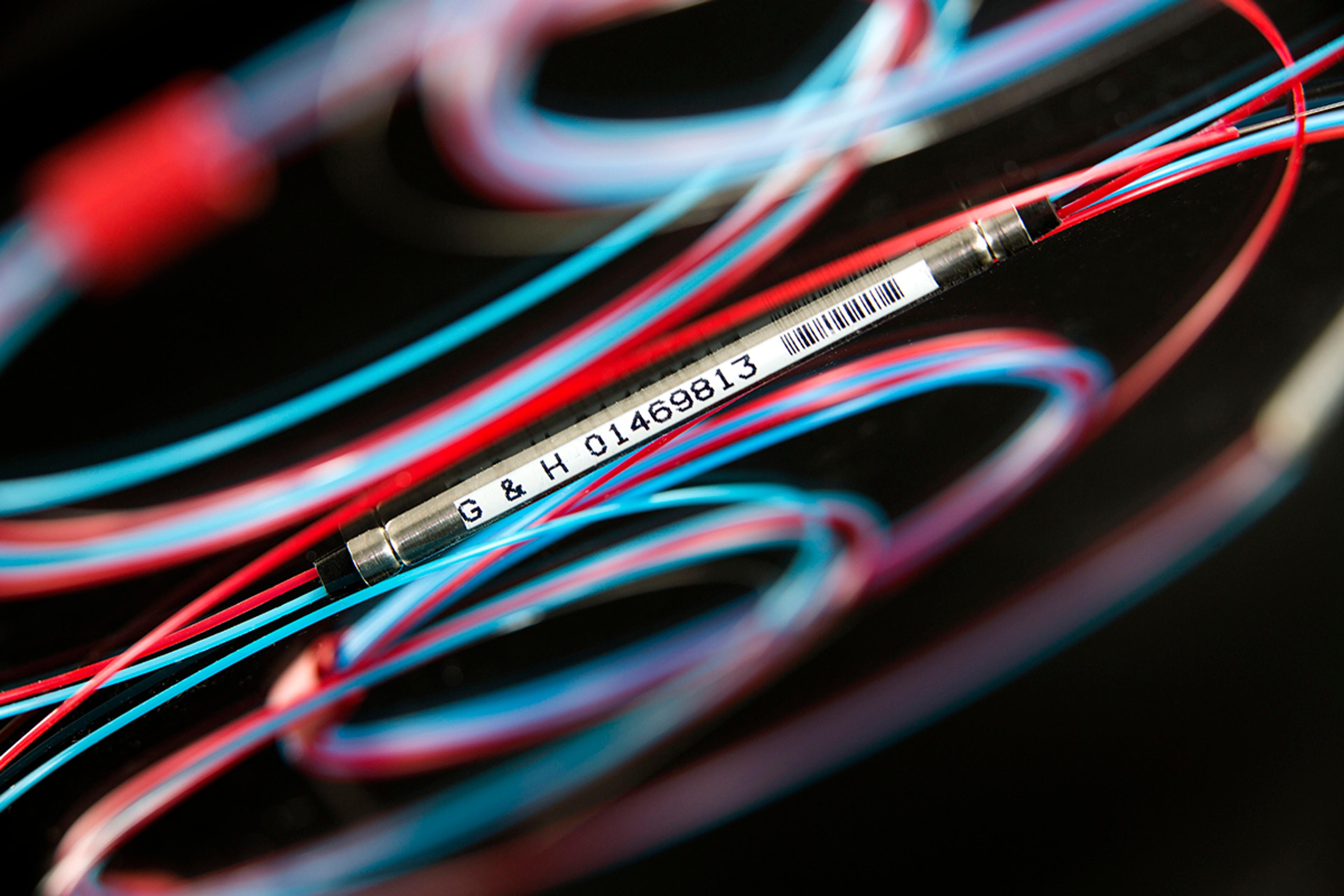
Technologies Enabling High-Performance Fiber Optic Links for 5G, Data Centers & Subsea Networks
The rapid growth of 5G, hyperscale data centers and global subsea communications is driving greater demand for fiber optic links that can deliver higher bandwidth, lower loss and long-term reliability. In these environments, overall network performance depends not only on system architecture, but also on the optical components, packaging methods and manufacturing precision behind each link. G&H (LON: GHH) brings together expertise in photonic design, packaging and process control to support fiber optic systems built for performance at scale.
Fiber optic links outperform copper-based alternatives by enabling high-speed, low-latency data transmission over distances ranging from a few meters in data centers to thousands of kilometers in subsea networks. However, achieving this performance in real-world deployments depends on a combination of optical efficiency, packaging robustness, and manufacturing consistency.

Core technology requirements in modern fiber-optic links
Across telecom architectures - whether interconnecting 5G radio units, scaling hyperscale data centers, or bridging continents via subsea cable systems - several technical requirements consistently emerge:
- Low optical loss and high power handling, enabling long-reach transmission and efficient amplification
- Miniaturized photonic assemblies, supporting higher channel density and compact system designs
- Power-efficient, high-speed optical sources and modules, reducing thermal load and operational cost
- Reliable switching and signal routing, maintaining performance under dynamic network conditions
Failure to address any one of these areas can limit system reach, reduce uptime, or increase total cost of ownership.
Optical performance without compromise
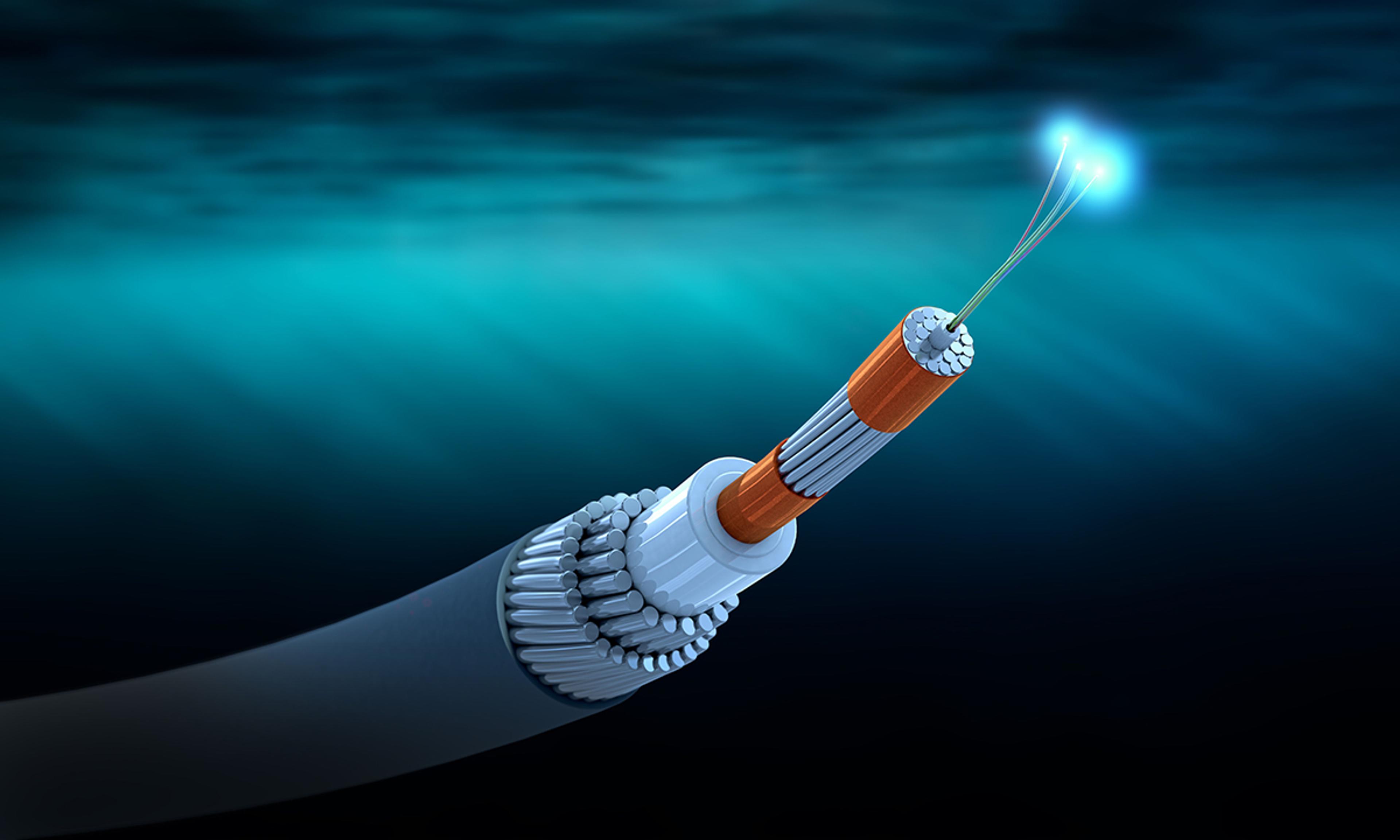
Low-loss, high-damage-threshold optical components are fundamental to modern telecom links, particularly in high-power applications such as EDFAs (Erbium-Doped Fiber Amplifier's) and long-haul transmission. Excess insertion loss compounds rapidly over distance, while insufficient power handling can limit system scalability.
G&H designs and manufactures optical components engineered to operate reliably under high optical power while maintaining minimal loss. This combination is especially critical in subsea and data-center environments, where signal integrity must be preserved over long lifetimes without physical intervention.
Miniaturization driven by packaging expertise
As telecom equipment becomes denser and more distributed, photonic packaging plays an increasingly decisive role. Compact form factors reduce footprint and weight, but also demand tighter alignment tolerances and greater mechanical stability.
G&H’s packaging expertise has been shaped by decades of supplying photonic assemblies for harsh environments, including undersea deployments. These applications impose stringent requirements on:
- Form factor and thermal management
- Hermetic sealing and moisture exclusion
- Sub-micron alignment accuracy
- Resistance to shock, vibration, and temperature cycling
Rather than treating packaging as an afterthought, G&H engineers it as a core performance enabler.
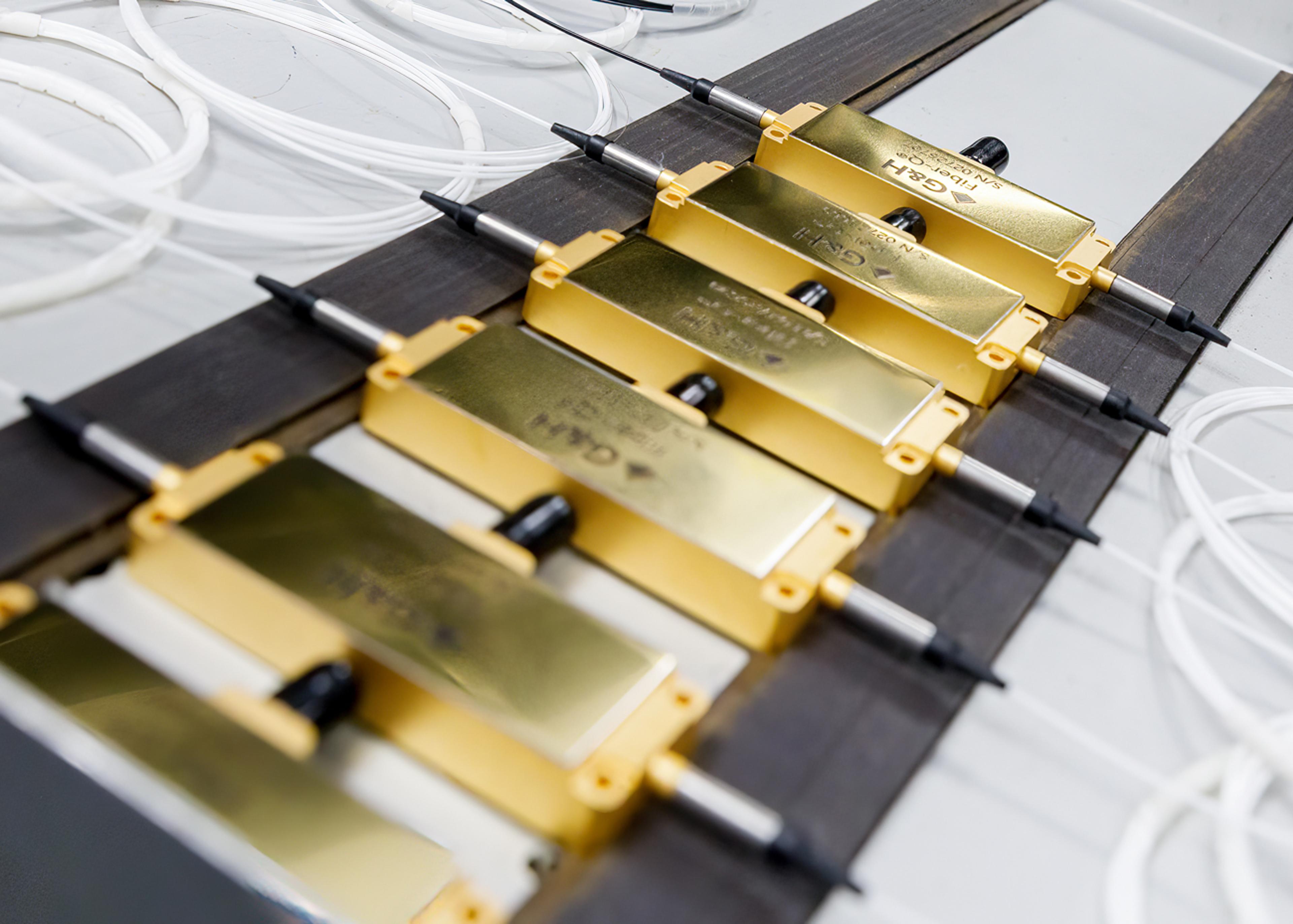 ©️ G&H Fiber-Q®
Engineering for reliability at scale
In fiber optic links, long-term reliability is often determined by how components are assembled and fixed in place. G&H employs design and manufacturing approaches that directly address common failure mechanisms.
For example, hermetic sealing is achieved by vacuum-sealing optical fibers within low-profile steel housings, eliminating air-to-glass interfaces that can introduce loss or degradation over time. Active optical components are fixed using laser welding rather than adhesives, delivering superior positional stability and repeatability under thermal and mechanical stress.
Wire bonding is used to create robust, low-loss electrical interconnects capable of withstanding the environmental extremes encountered in subsea and distributed telecom installations.
Manufacturing control as a competitive advantage
High-performance photonic components cannot be separated from the processes used to build them. G&H has made sustained investments in three areas that directly impact finished-product quality:
- Material quality, with a significant proportion of components designed and manufactured in-house
- Manufacturing precision, ensuring repeatable alignment and optical performance
- Environmental stability, supported by expanded cleanroom and R&D facilities
This vertically integrated approach allows tighter process control, faster iteration, and more predictable scaling from prototype to volume production - an increasingly important factor for telecom operators and system integrators.

A trusted partner for next-generation fiber optic links
By combining optical design expertise, advanced photonics packaging, and controlled manufacturing environments, G&H supports fiber optic link applications ranging from 5G fronthaul and data-center interconnects to subsea networks spanning thousands of kilometers.
As global demand for bandwidth and reliability continues to rise, the performance of fiber optic links will depend not only on system architecture, but on the quality and robustness of the underlying photonic components. G&H’s approach - engineering performance from materials through to packaged assemblies - positions it as a reliable partner for the next generation of telecom infrastructure.
G&H Fiber Optic Solutions
G&H active and passive fiber optic components and modules offer the performance and reliability required for some of the most demanding and challenging applications in the world.