Fiber Optics
G&H fiber optics, optimal performance and reliability. Qualified and deployed in many harsh environments.
 ©️ G&H attending ICSO 2026
Sorrento, Italy – October 2026
G&H will showcase its latest photonic technologies for space communications, sensing and scientific missions at the International Conference on Space Optics (ICSO) 2026, where visitors can meet the team at Stand 21.
As space systems generate and transmit increasing volumes of data, the underlying communications infrastructure must deliver greater capacity across vast distances while meeting demanding requirements for power, reliability and signal integrity. At ICSO, G&H will demonstrate how its expertise in fiber optics and acousto-optics is being applied to these challenges - from photonic systems already operating in orbit to high-power technologies and research supporting the next generation of optical communications.
A key focus will be G&H's expanding capabilities in laser satellite communications, building on recent milestones with the Japan Aerospace Exploration Agency (JAXA), SmallCAT and the company's development of high-power optical amplification for ground-to-space feeder links.
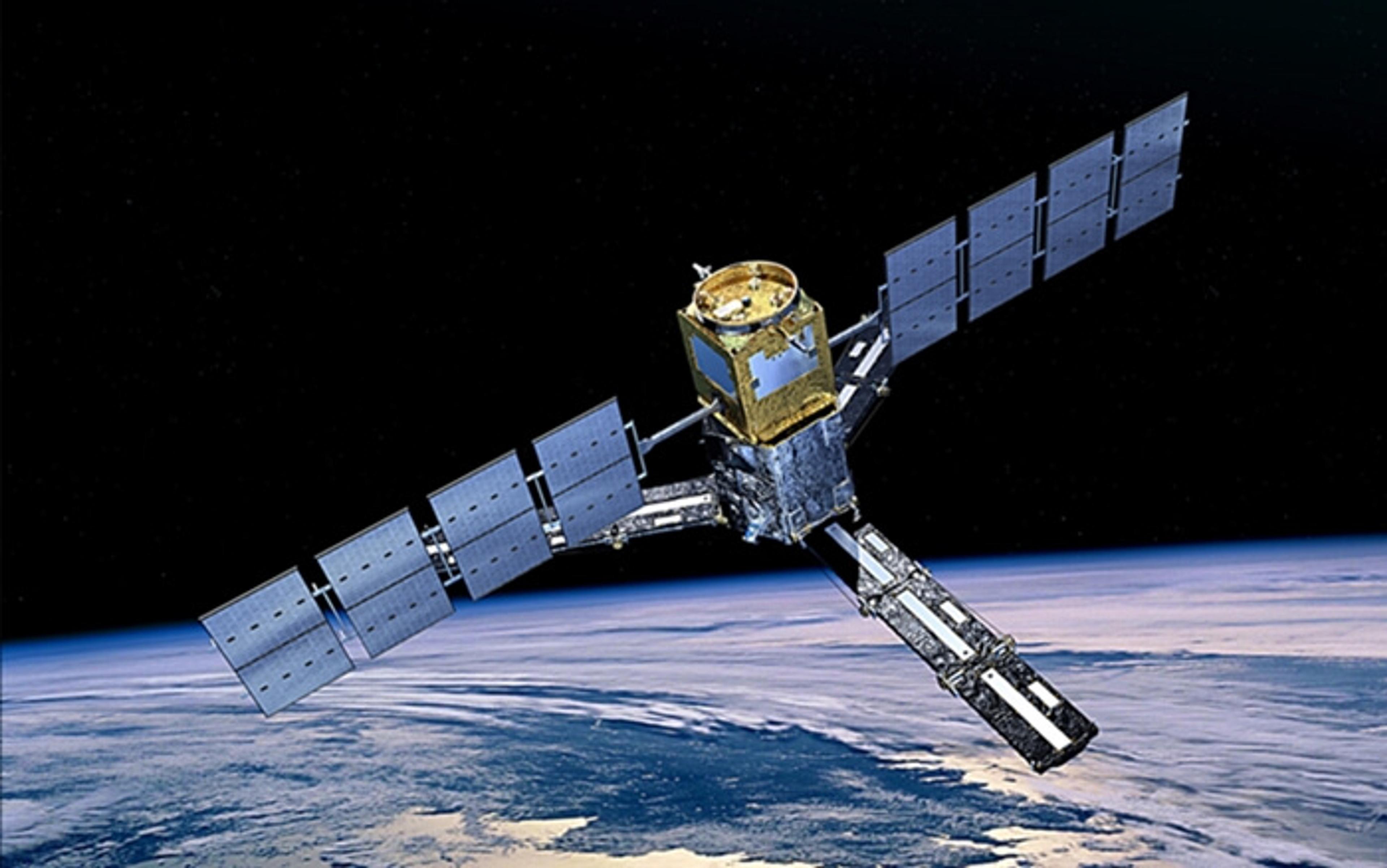
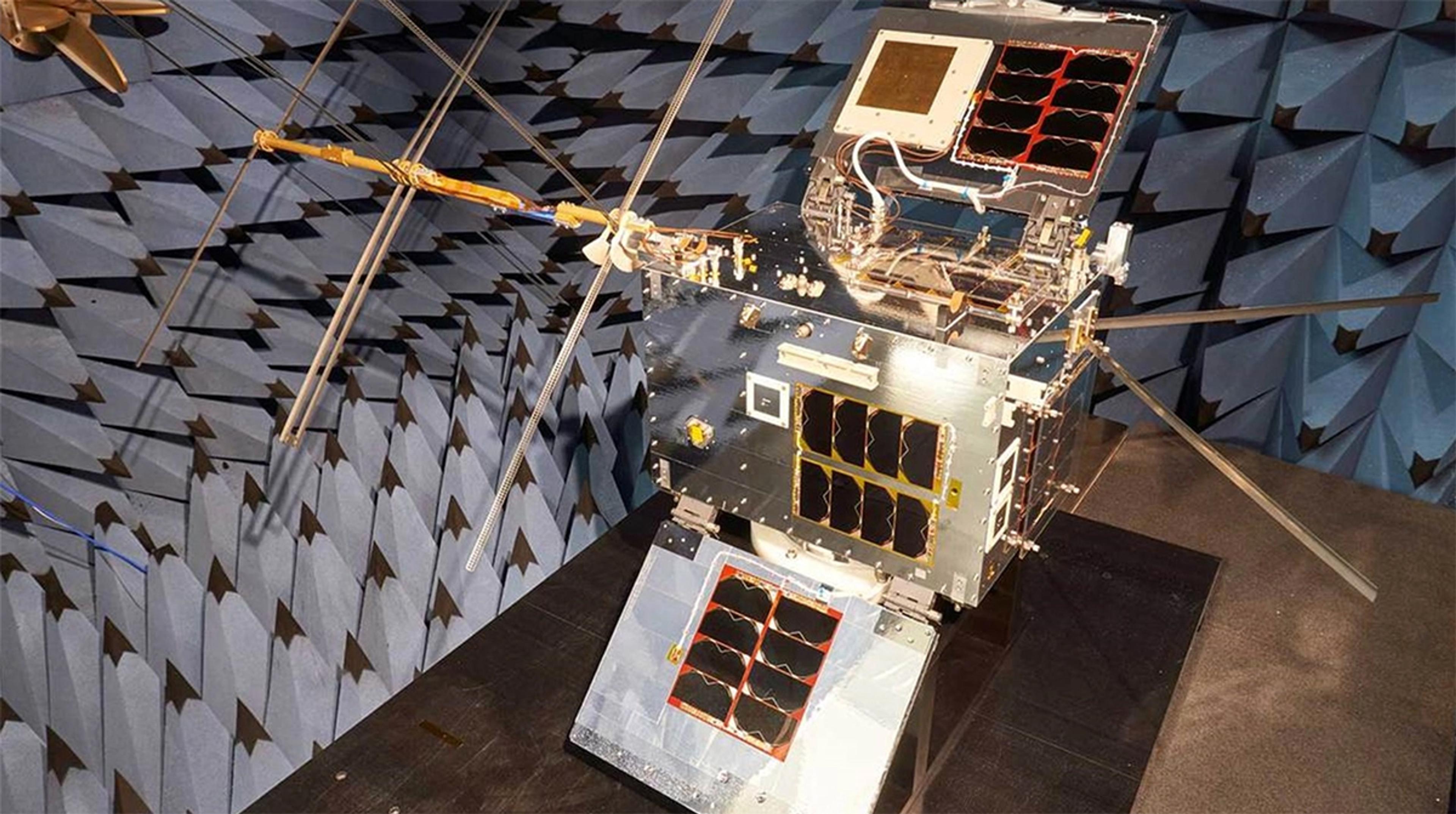
 ©️ JAXA - Laser Utilizing Communication System "LUCAS"
Earlier this year, G&H received a Letter of Appreciation from JAXA recognizing its contribution to the development and operation of the Laser Utilizing Communication System (LUCAS), following previous recognition from NEC Space Technologies.
LUCAS incorporates two G&H-designed and manufactured optical amplifier systems that support an all-optical bidirectional link between geosynchronous (GEO) and low Earth orbit (LEO) satellites. A high-power amplifier boosts the transmitted optical signal, while a low-noise pre-amplifier strengthens the weak signal received after travelling tens of thousands of kilometers.
The system has demonstrated optical inter-satellite communications at 1.8 Gbps across approximately 40,000 km between the Advanced Land Observing Satellite-4 (ALOS-4) and Japan's Optical Data Relay Satellite, demonstrating the performance of G&H photonic technology in an operational space environment.
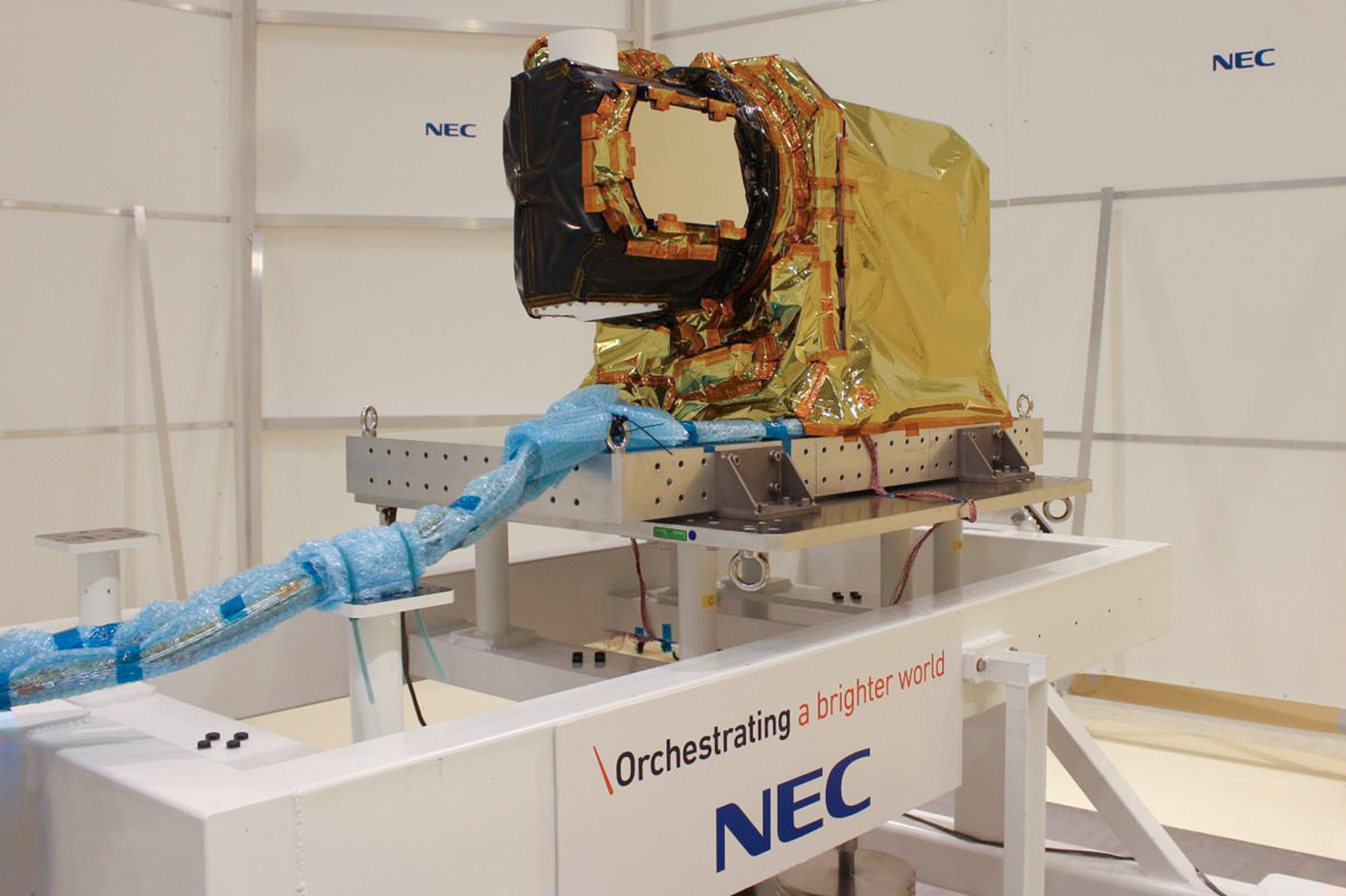
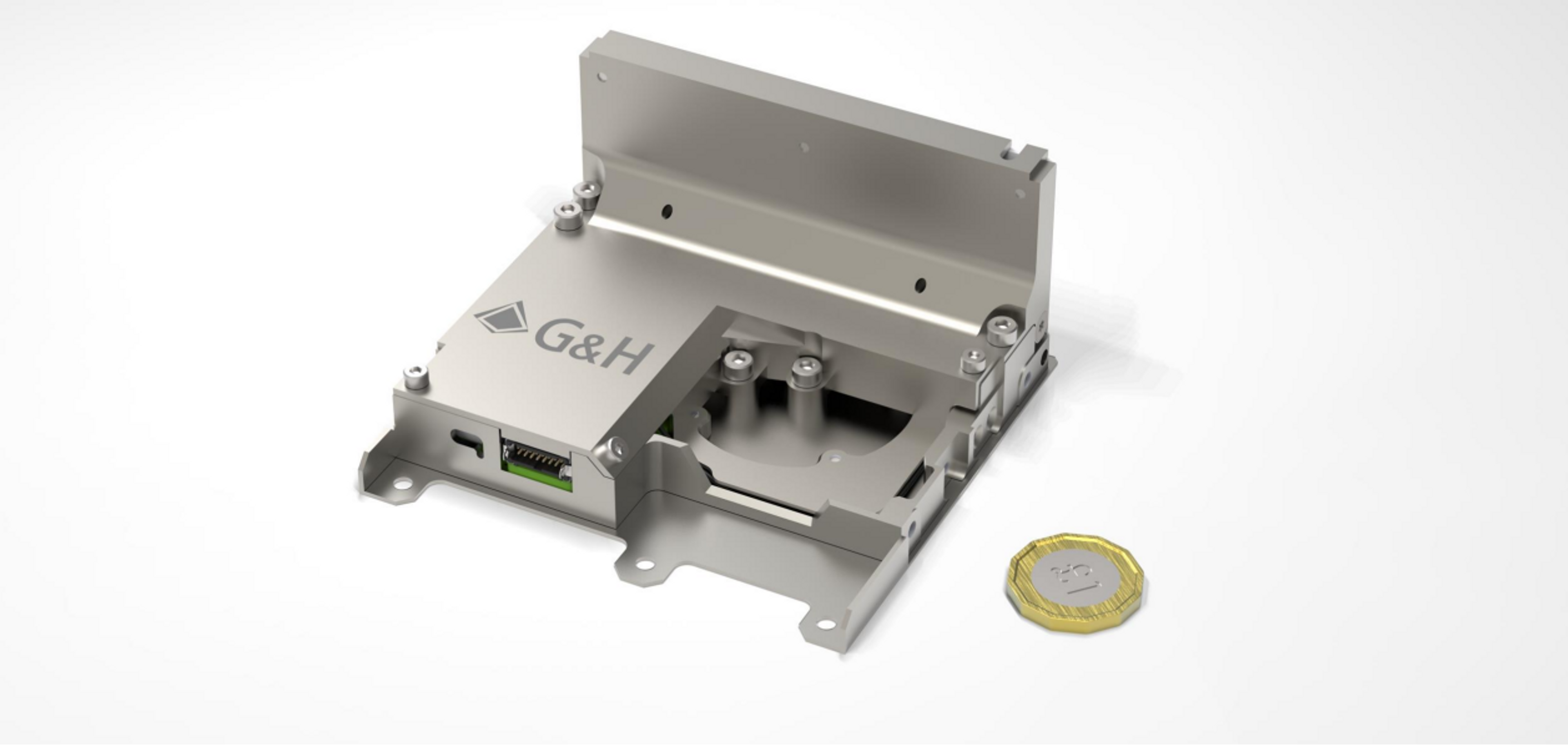 SmallCAT laser transmitter©️ G&H
G&H's space communications heritage also includes SmallCAT, the compact laser communication terminal aboard Norway's NorSat-TD satellite. G&H developed the custom amplified laser transmitter at the heart of the terminal, integrating a high-bandwidth laser source, amplification and space-grade fibre-optic components within the constrained form factor required for a small-satellite application. The system has successfully established an optical connection between the satellite and a terrestrial ground station.
Together, these programs demonstrate G&H's progression from high-reliability fiber-optic components towards increasingly integrated photonic subsystems for space applications.
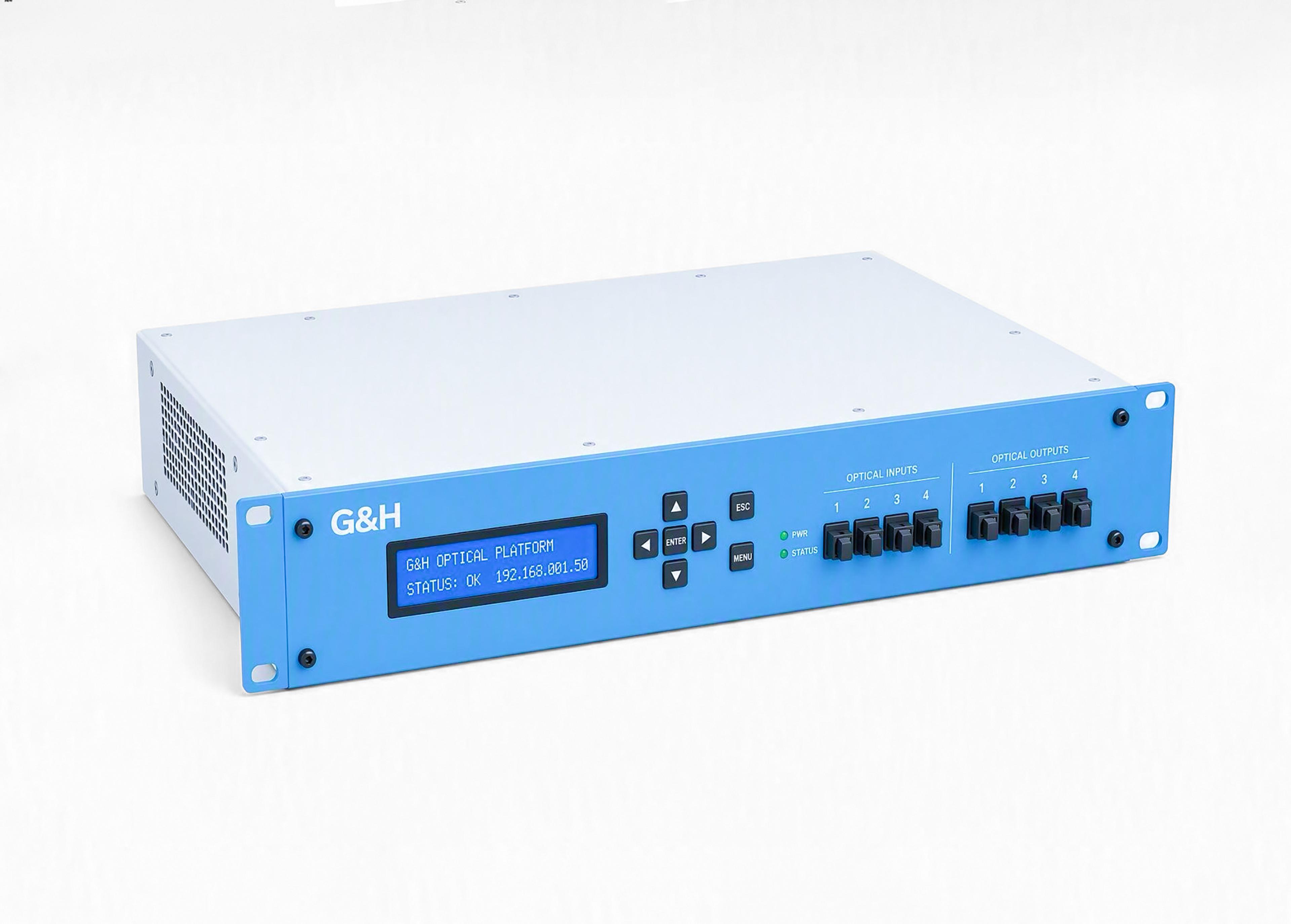
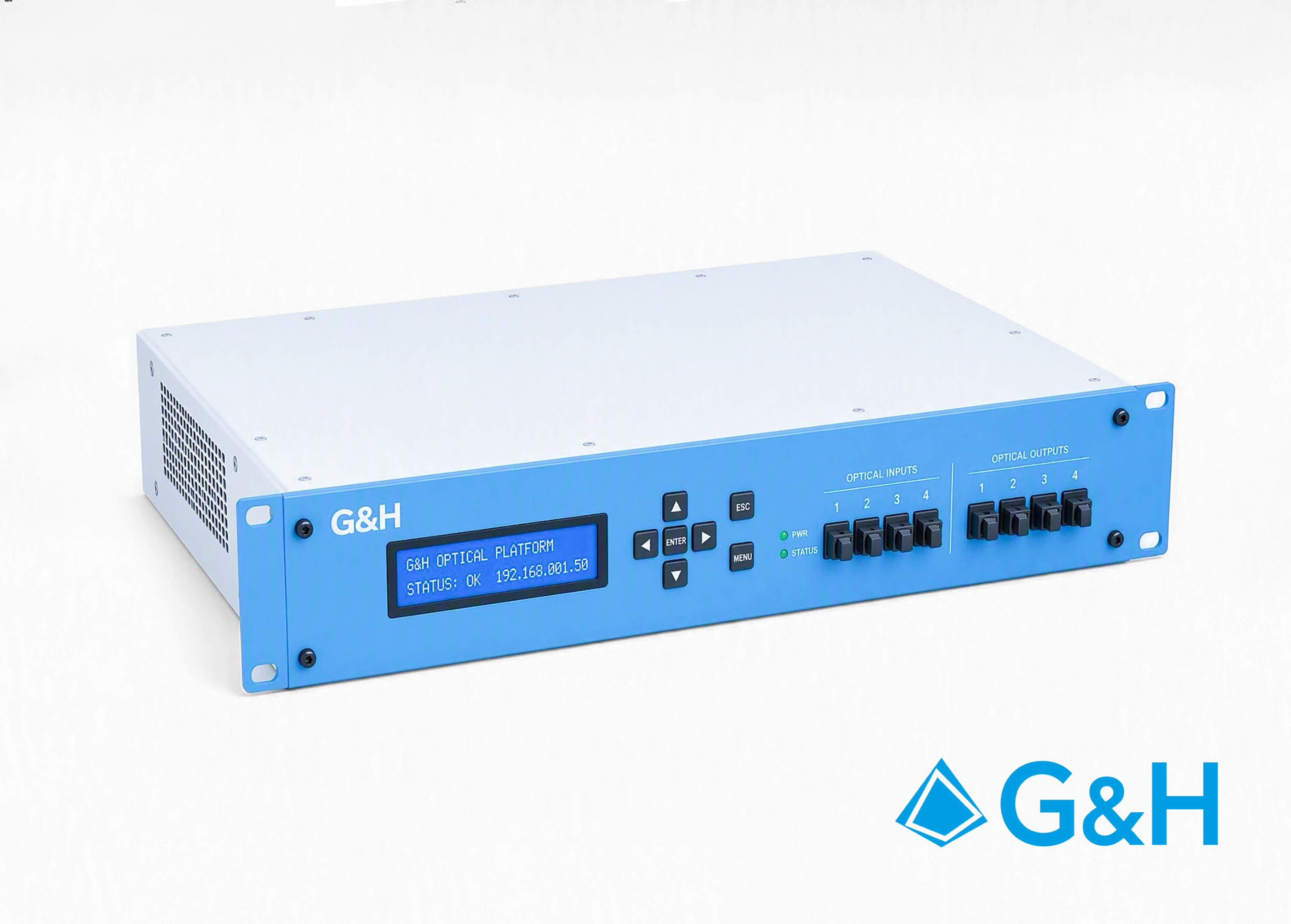 ©️ G&H High-Performance Fiber Optic Modules
At ICSO, G&H will also introduce its newly launched 50 W Optical Fiber Amplifier, developed specifically for optical feeder links and optical ground stations supporting high-data-rate satellite uplinks.
The Erbium/Ytterbium co-doped Fiber Amplifier (EYDFA) is designed to maximize output power while minimizing data distortion. Operating in the C-band and supporting DP-QPSK and OOK modulation, the amplifier packages G&H's high-power fiber expertise into a practical 19-inch, 3U rack-mountable system for integration into optical ground-station architectures.
The new product builds on G&H's development of high-power amplification for free-space optical communications. Through the European VERTIGO project, two G&H 50 W optical amplifiers were coherently combined to amplify a single 25 Gbps C-band channel to 97 W while maintaining data integrity, supporting the development of very-high-capacity optical feeder links.
 ©️ Inter satellite laser links ESA - P. Carril
Alongside the technologies on display, G&H will contribute new research addressing the nonlinear effects that emerge as optical communications progress towards higher-power, multi-channel systems.
Sharana Kariappa of G&H Torquay will present “Four-Wave Mixing in 100W WDM Optical Fiber Amplifier for Tbps Communications” on Friday, 16 October, from 2:00 - 3:20pm CEST.
The research examines four-wave mixing (FWM) in high-power wavelength-division multiplexed (WDM) optical fiber amplifiers for satellite-to-ground optical links targeting Tbps-level transmission.
While FWM is largely avoided in conventional terrestrial fiber communications because of lower optical powers and the effects of dispersion over long transmission distances, free-space optical communications require much higher powers to overcome transmission distance and atmospheric losses. At approximately 100 W, nonlinear effects can become significant even across the relatively short lengths of fiber within the amplifier and between the amplifier and telescope.
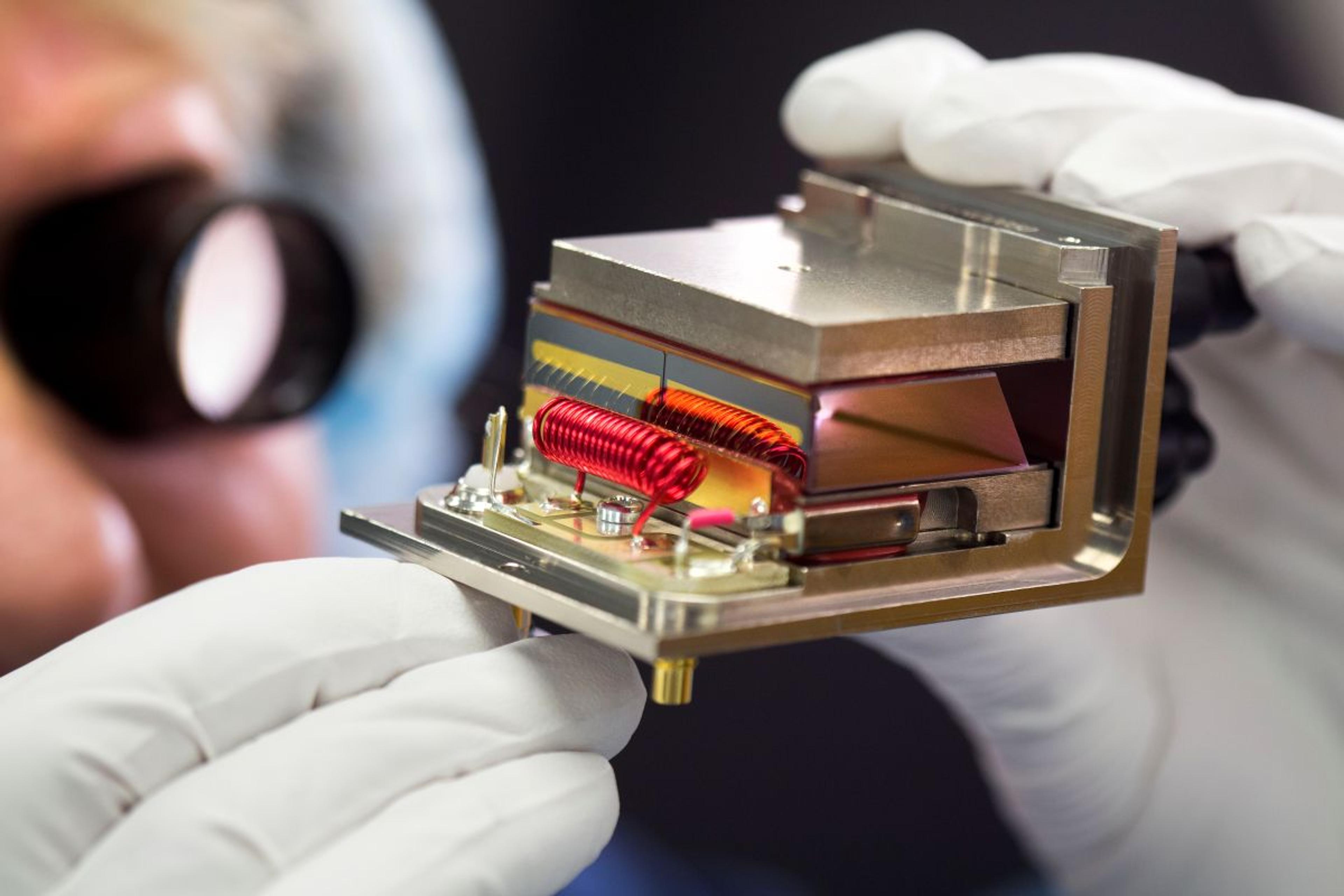
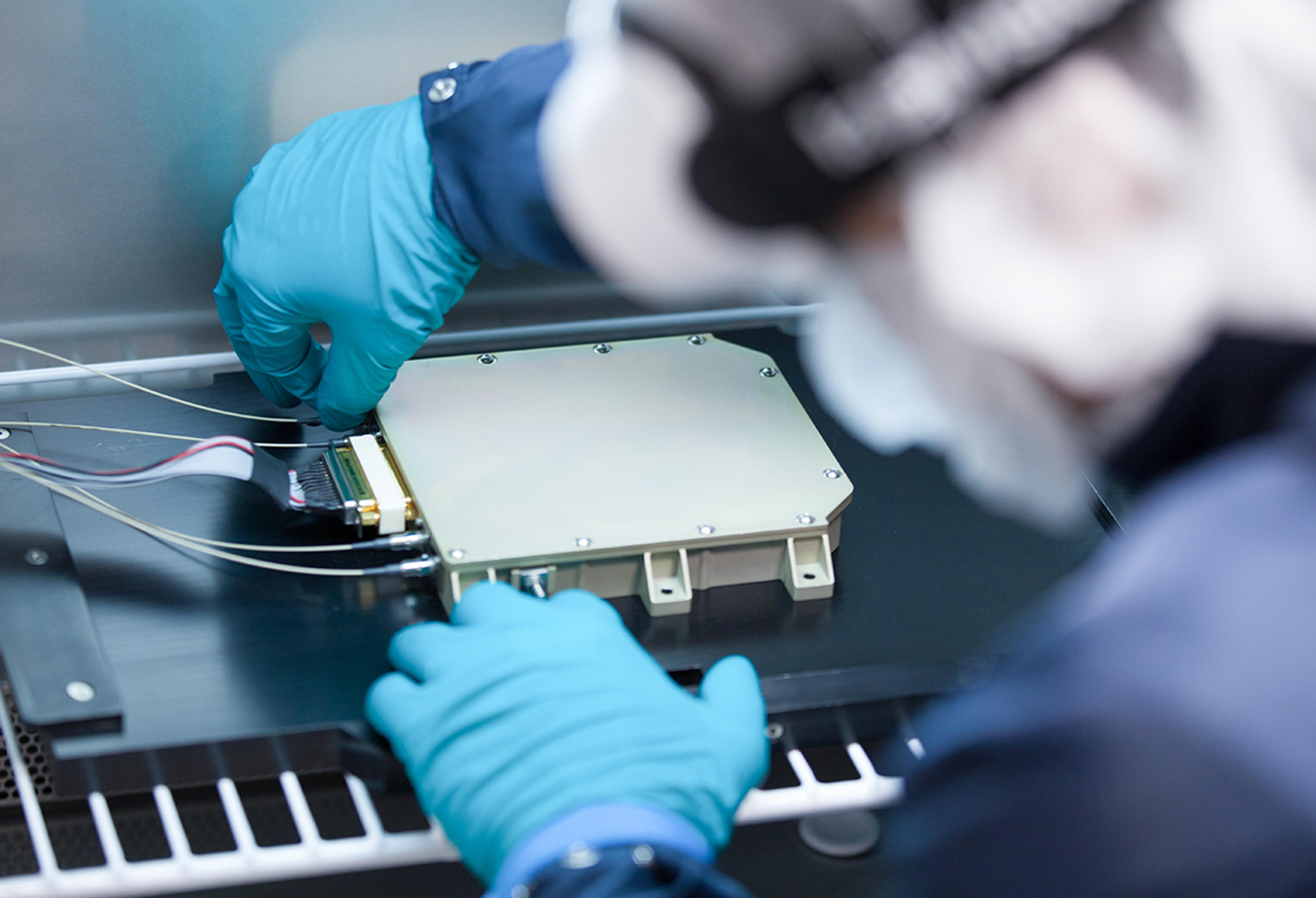 ©️ G&H Torquay High-Performance Modules
Experimental observations from a 10-channel, 200 GHz-spaced WDM amplifier system operating at 100 W output revealed significant FWM generation and an optical signal-to-noise ratio (OSNR) of approximately 24 dB. Complementary simulations using 25 Gbaud/s DP-QPSK modulation showed increasing signal degradation as nonlinear effects accumulated.
“Space communications are evolving rapidly, and increasing optical power is only part of the challenge,” said Dr Stratos Kehayas, President, Photonics Division at G&H. “As systems move towards higher-capacity, multi-channel links, we also need to understand and manage the effects that higher power can have on the integrity of the data being transmitted.
“At ICSO, we can point to G&H technology already operating successfully in space through programs such as LUCAS and SmallCAT, introduce our new 50 W amplifier for optical ground stations, and share research addressing the challenges that emerge as the industry moves towards 100 W-class, Tbps-scale communications. Together, these developments demonstrate how we are applying our fiber-optic and photonic engineering expertise to both today's space missions and the communications requirements that come next.”
 ©️ G&H
G&H will also showcase its space-qualified acousto-optic technologies for sensing and scientific instrumentation.
G&H acousto-optic devices have supported planetary exploration missions including NASA's Perseverance rover, ExoMars and Hayabusa2, providing established heritage for photonic technologies designed to operate in demanding space environments.
Across these applications, G&H combines expertise in photonic components with custom engineering, integration, qualification and manufacturing capabilities. This enables the company to support customers as requirements progress from individual components towards increasingly complex photonic subsystems for future space missions.
Visitors to Stand 21 at ICSO 2026 can meet G&H's team to discuss satellite laser communications, optical feeder links, high-power fiber amplification, space-based sensing and scientific instrumentation, and learn more about the newly launched 50 W Optical Fiber Amplifier.