Fiber Optics
G&H fiber optics, optimal performance and reliability. Qualified and deployed in many harsh environments.
 ©️ G&H Torquay Fiber Optics Manufacturing
Five years ago, we identified aerospace and defense as one of the markets where photonics was poised to make a significant impact¹. Robust sensing and imaging, communication in RF-denied environments and navigation without access to GPS were emerging as critical challenges where photonics could offer unique solutions.
The challenges have not gone away. Quite the opposite.
Geopolitical tensions, rapidly evolving threats and the proliferation of relatively inexpensive autonomous systems are forcing defense organizations to reconsider both the technologies they deploy and, perhaps more importantly, how quickly they can deploy them. That pressure is reflected in global military expenditure, which reached approximately $2.9 trillion in 2025².
Historically, aerospace and defense have been characterized by long technology development and qualification cycles. That is understandable. Equipment must operate reliably in some of the harshest environments imaginable, from vibration and extreme temperatures to radiation, contamination and shock. Failure is simply not an option.
But the equation is changing.
The requirement for qualification and reliability remains; what is disappearing is the luxury of time. Technologies that once might have spent years moving from laboratory demonstration to operational platform are increasingly being challenged to make that transition faster.
And photonics is finding itself at the center of this acceleration.
Why? Because many of the challenges facing modern defense — and protecting lives in today’s conflicts — are fundamentally problems of seeing, sensing, navigating, communicating and delivering energy precisely.
Photonics can do all five.
Three areas in particular demonstrate how rapidly the technology landscape is evolving: quantum-enabled navigation in GPS-denied environments, laser directed-energy systems, and intelligent multi-band infrared imaging.

Modern military systems depend heavily on precise position, navigation and timing (PNT).
Aircraft, ships, ground vehicles, autonomous platforms and communications networks all rely, directly or indirectly, on accurate timing and positioning information. GPS has transformed these capabilities, but its ubiquity has also created a vulnerability.
In a contested environment, what happens when GPS is jammed, spoofed or simply unavailable?
The answer will not be one technology. Resilient PNT is likely to be built from multiple complementary technologies, and optics and photonics already provide much of its technological backbone.
Fiber-optic gyroscopes and ring-laser gyroscopes have long provided highly reliable inertial navigation. Their attraction is straightforward: no reliance on an external radio-frequency navigation signal and, in the case of optical gyroscopes, extremely precise measurement of rotation using light.
 ©️ G&H acousto-optic photonics assemblies
But the next frontier is particularly interesting.
Advances in quantum sensing and optical atomic clocks are opening the possibility of maintaining extraordinary levels of timing and navigation accuracy for extended periods without continuous access to GPS. R&D programs like the Innovate UK CASPA project established the technological foundation for practical ultrastable lasers and atom traps³.
More recently, advanced atomic and optical clock technologies have begun moving toward deployment in space. Galileo Second Generation satellites will carry six improved atomic clocks, while European programs are developing optically pumped, optical and ion clocks for potential future flight, illustrating the transition from laboratory-based timing technologies toward deployable space systems⁴.
This is an important distinction. The question is no longer simply: can we navigate without GPS? Increasingly it is: how accurately, for how long, and in what size of system can we do it?
Moving optical clocks and quantum sensors out of controlled laboratories and onto deployable platforms introduces an entirely new set of engineering challenges.
Lasers must be extremely stable in optical power and frequency, with precisely controlled beam delivery. Their frequencies must match the atomic transitions of the selected elements used. Acousto-optic devices operating within feedback-controlled architectures are ideal candidates for maintaining ultrastable laser beams. Specialized nonlinear materials such as lithium niobate are needed to support wavelength conversion. Fiber amplifiers amplify the signals for powering multi-axis atomic traps. All of these technologies must maintain their performance under shock, vibration and temperature variation while meeting demanding size, weight and power constraints.
In other words: the quantum sensor may attract headlines, but photonics makes the system possible.
The next challenge is therefore industrialization. DARPA’s 2026 “It’s About Time” initiative illustrates this shift from proving the technology to manufacturing it, focusing specifically on establishing a manufacturing pipeline for tactical-grade optical clocks and addressing challenges including laser integration, miniaturization, ruggedization and scalable production⁵.
The opportunity is significant: navigation architectures that are not dependent upon a single external signal, providing greater resilience for platforms operating in increasingly contested environments.
 ©️ DragonFire laser system at the MBDA facility in Stevenage, UK 20.11.25 - UK MOD Crown Copyright 2025
Perhaps nowhere is the transition from photonics research to operational capability more visible than in laser directed energy. The DragonFire laser directed energy weapon, developed through the UK Ministry of Defence and industry, has progressed from technology demonstration to planned operational deployment aboard a Royal Navy Type 45 destroyer. Following successful trials against aerial targets, the program’s introduction into service was accelerated by five years, from 2032 to 2027⁶.
That five-year acceleration is significant. It illustrates the broader shift taking place across defense: the question is increasingly not whether high-energy laser technology can work, but how quickly it can be engineered, qualified, manufactured and integrated onto operational platforms.
Laser systems offer several fundamentally different characteristics from conventional kinetic interceptors: energy can be delivered at the speed of light, engagement can be highly precise, and the effective cost per engagement can potentially be reduced once the system has been deployed.
But there is no single 'laser weapon'. Concept of operations determines the photonics.
A ground-based counter-UAS system protecting personnel or critical infrastructure has very different requirements from a naval system expected to operate continuously in a salt-laden maritime environment. And both are different again from a future space-based platform, where every gram, watt and cubic centimeter matters.
Power requirements also increase as the target set becomes more demanding. Systems intended to counter smaller unmanned platforms can operate at considerably lower optical powers than systems intended eventually to address larger, faster and more resilient threats. As the required power increases, so does the photonics challenge.
High-power fiber-laser architectures require extremely reliable fiber components capable of handling progressively greater optical power. Beam quality becomes critical. Optical coatings must withstand very high laser intensities without degradation or catastrophic damage. Thermal management, beam control and atmospheric effects become system-level problems.
 ©️ Raytheon TFLN wafer
And this is where the next photonics challenge begins. Increasing laser power is only part of the equation. As directed energy architectures become more sophisticated, they will demand increasingly precise and responsive ways of controlling light. Emerging electro-optic platforms such as thin-film lithium niobate (TFLN), offering the potential for high-speed and efficient optical modulation, could become an important enabling technology as these systems evolve.
The next generation of directed energy systems will therefore depend not simply on generating more laser power, but on the ability to generate, control and manage that optical power reliably in an operational environment.
That distinction matters. A laser demonstrated under controlled conditions is one thing. A system that maintains beam quality and optical performance after vibration, thermal cycling and prolonged operation aboard a moving platform is something entirely different.
This is where the photonics supply chain becomes critical. High-power fiber components, precision optics, high laser-induced damage threshold coatings, beam-control technologies and rugged opto-mechanical assemblies are not peripheral to the system. Collectively, they determine whether laboratory performance can become operational capability.
Directed energy therefore illustrates a wider shift occurring across defense: the underlying physics has increasingly been demonstrated; the next challenge is engineering, integration and scalable manufacture.
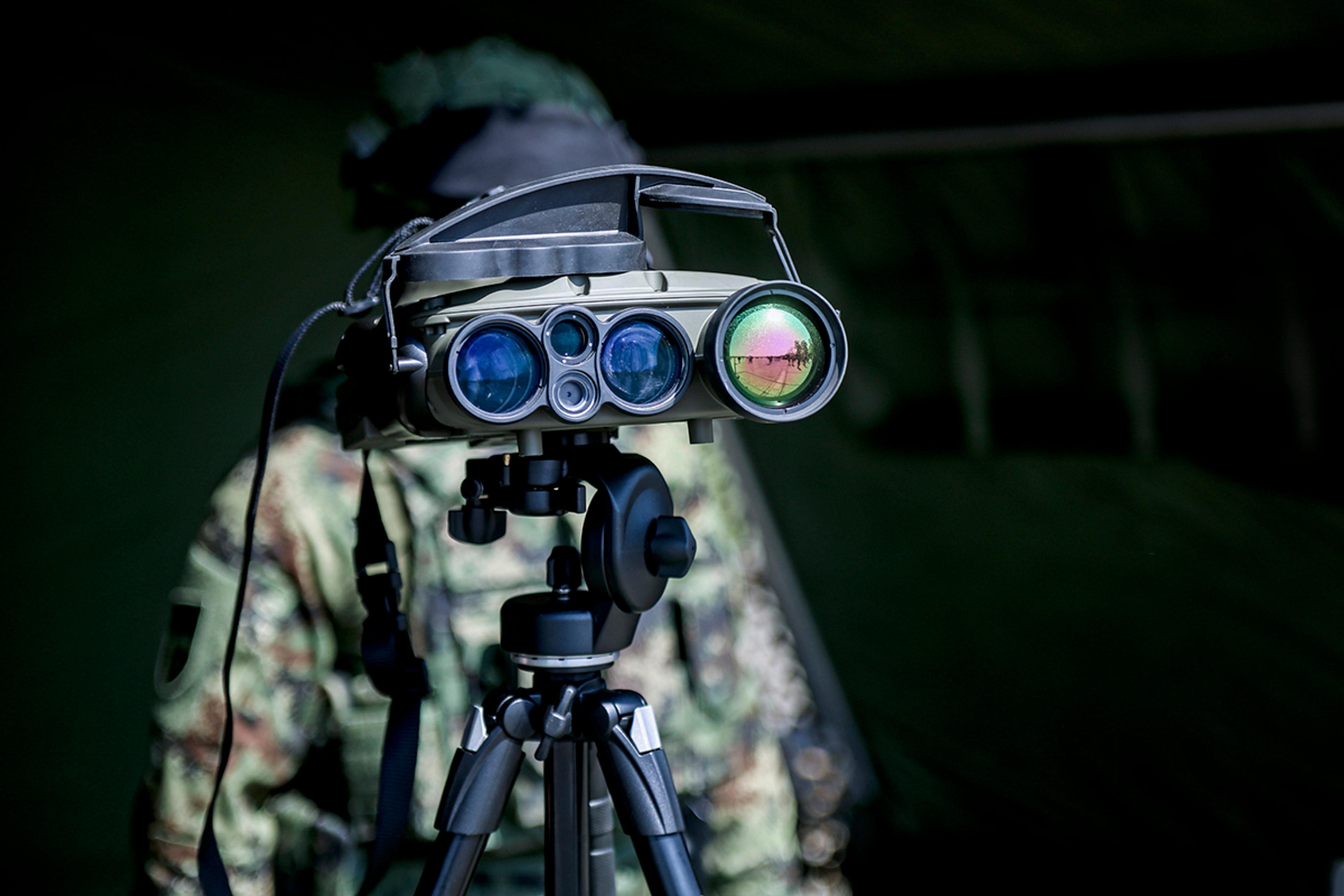
For decades, electro-optical/infrared (EO/IR) systems have enabled operators to see beyond the limits of the human eye. Once regarded as specialized technologies, they are now becoming integral to defense and security architectures as the need for greater situational awareness - and better protection of personnel on the battlefield and in urban environments - continues to grow.
Different infrared wavebands provide different information. SWIR can offer valuable imaging performance in conditions where visible systems struggle and can exploit reflected light signatures. MWIR provides strong thermal imaging capability and is particularly valuable for detecting and discriminating objects over extended ranges.
Increasingly, the question is not necessarily SWIR or MWIR. It is how information from multiple spectral bands can be combined to improve situational awareness.
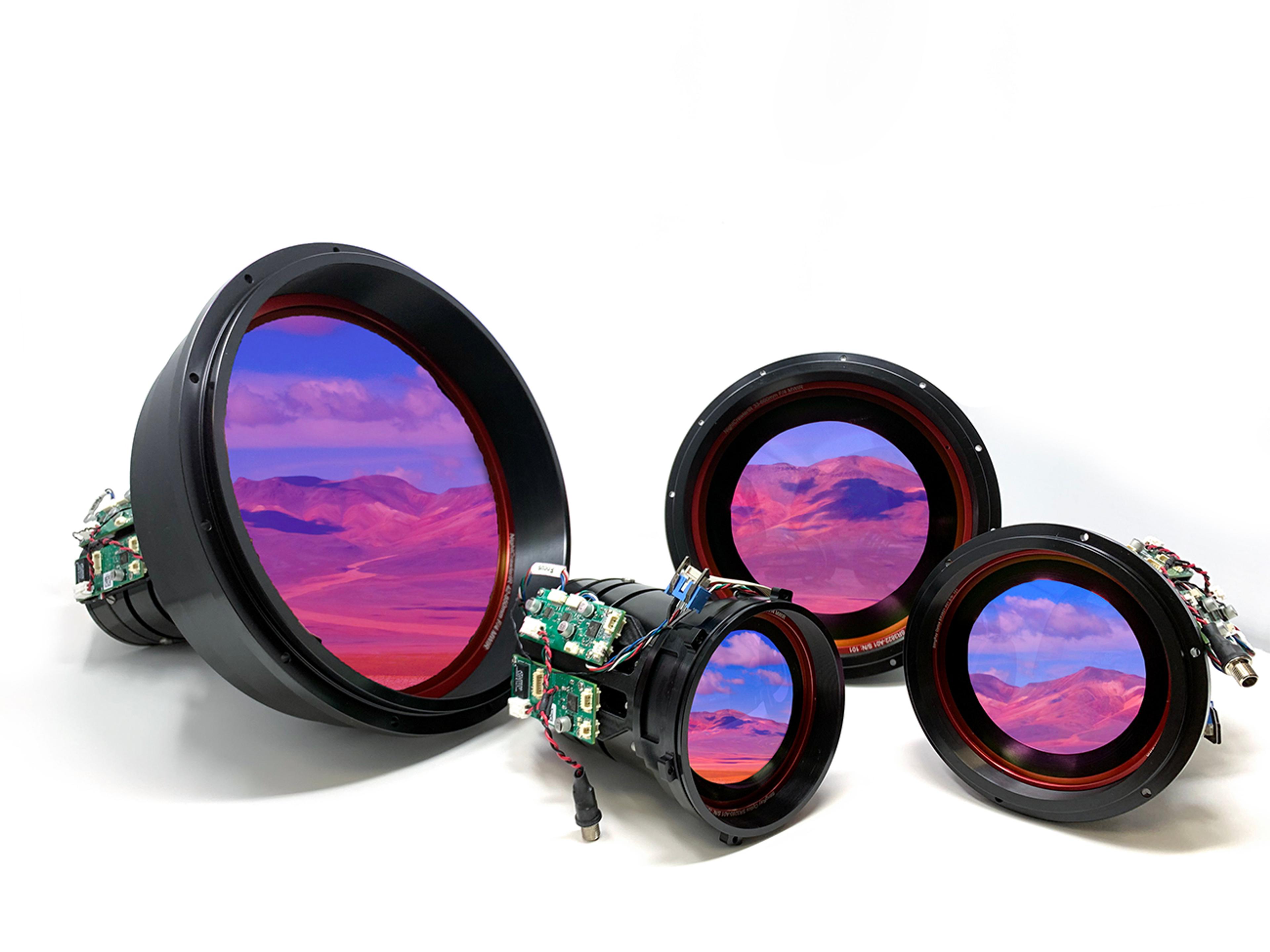
That creates a demanding optical-design problem. Broadband, multi-band systems must correct higher-order chromatic and geometric aberrations across wide spectral bands, often while meeting stringent size and weight constraints. Work undertaken by our optical design team demonstrated how a fast, wide-angle catadioptric architecture could provide a compact, well-corrected lens for broadband imaging applications⁷.
 ©️ G&H Stingray lens systems inspection
Translating that optical performance into a deployable system introduces further demands in specialist materials and coatings, precision alignment, ruggedized opto-mechanical design and environmental resilience.
Beyond the optical hardware, another transformation is taking place.
Artificial intelligence and increasingly capable onboard processing are changing what happens to the photons after they reach the detector. This transition is already visible in emerging defense sensing programs, where SWIR imaging is being combined with AI and machine learning to enhance target detection, identification and tracking, including applications such as counter-UAS⁸.
Yet even the most advanced AI can only interpret the information the optical system captures. Better algorithms cannot recover information that was never collected in the first place.
High-quality optical design, appropriate spectral selection, coatings, detector integration and image stability therefore remain fundamental to the performance of the overall system. This becomes particularly important as sensing moves across domains.
Environmental requirements vary significantly by platform. Ground vehicles require ruggedized imaging systems capable of surviving severe shock and vibration, while airborne systems introduce stringent size, weight and power constraints. Across these applications, optical assemblies may need to be sealed, athermalized and ruggedized to maintain alignment and imaging performance under demanding operating conditions⁹.
Space-based systems add radiation exposure, limited power availability, launch loads and severe thermal cycling, requiring radiation-tolerant materials and carefully engineered and ‘toleranced’ optical and opto-mechanical architectures.
The environment changes. The underlying requirement does not: collect more useful optical information, from further away, with greater confidence.
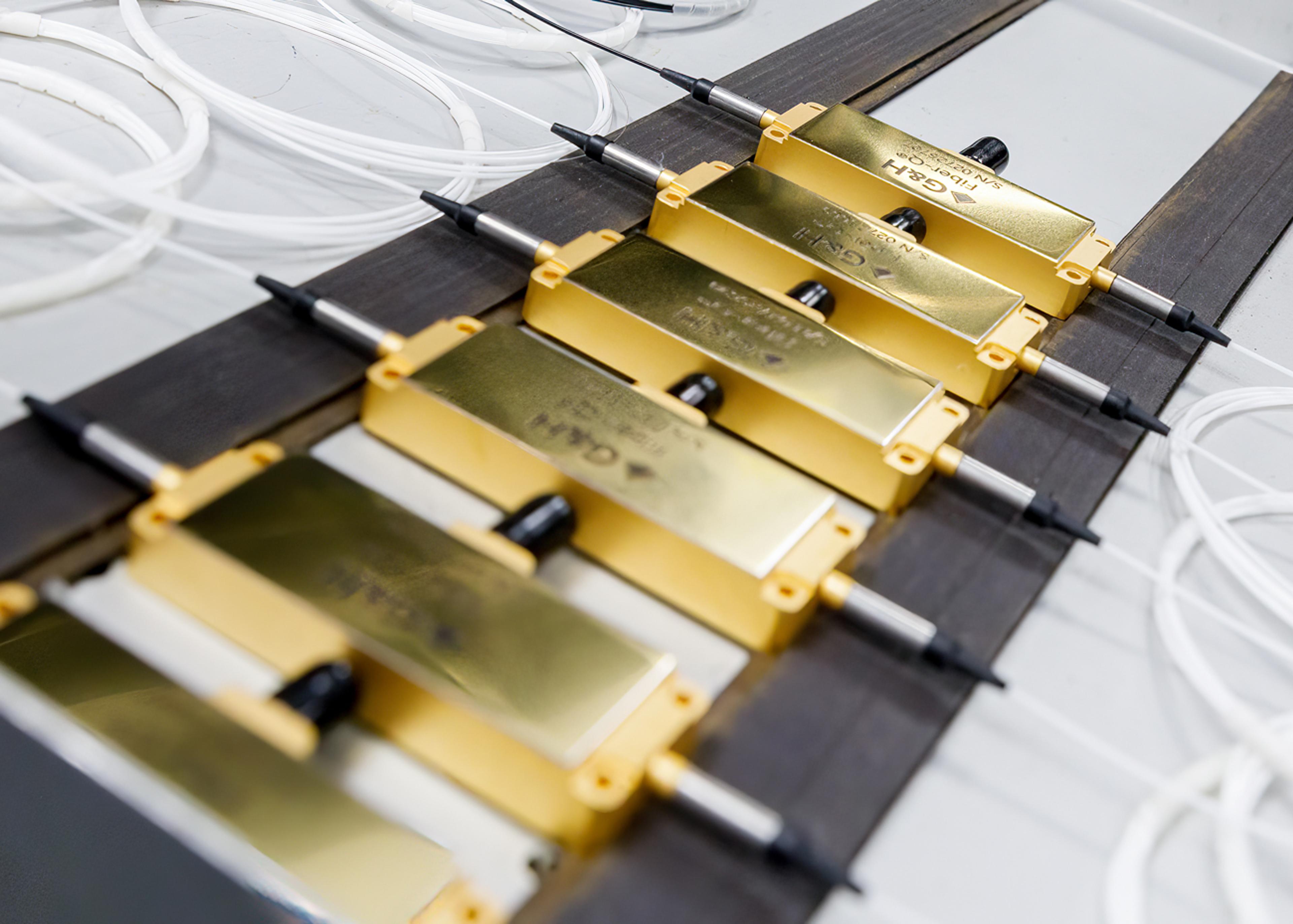 ©️ G&H Fiber-Q®
At first sight, a quantum optical clock, a high-energy laser and a multi-band infrared imaging system appear to have relatively little in common. Look beneath the application, however, and the engineering challenges become remarkably familiar.
All three demand high optical performance within increasingly stringent size, weight and power constraints. All must operate reliably in harsh environments. And all are moving from specialized technologies toward capabilities that defense organizations increasingly want to deploy at scale.
Performance alone is therefore no longer enough. The next generation of defense photonics must combine performance, reliability, ruggedization, manufacturability and scale.
Achieving that requires closer integration across the supply chain. Component manufacturers, photonics specialists, optical system designers and defense primes need to work together earlier, because decisions made at component level increasingly determine performance at system level.
The future belongs not simply to better components, but to better integrated photonic and optical systems.
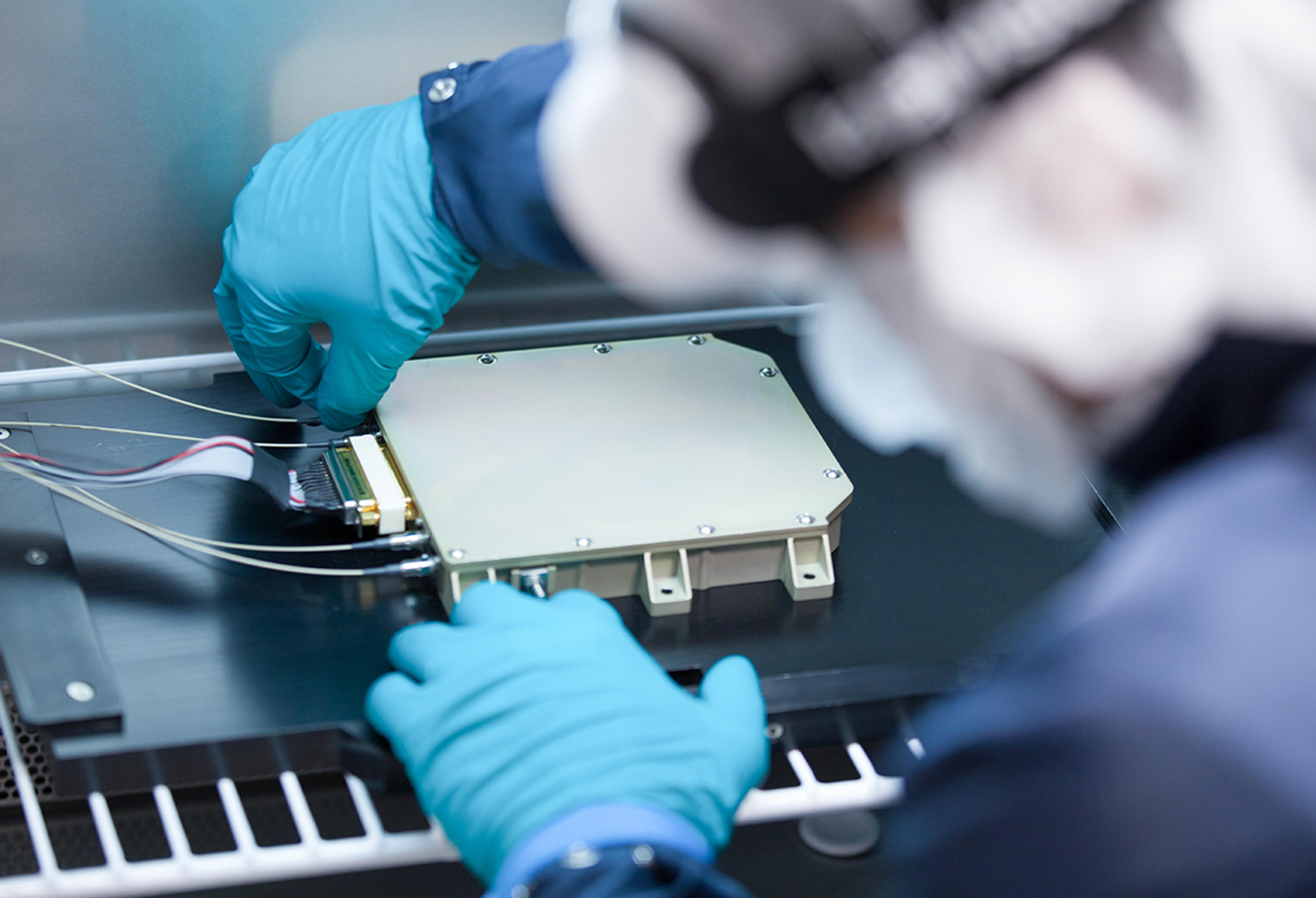 ©️ G&H Torquay High-Performance Modules
When we considered these markets in 2021, many of these technologies were still emerging¹. We argued that robust sensing and imaging, communication in RF-denied environments and navigation without GPS would become key challenges where photonics could offer unique solutions.
Five years later, what we saw coming is no longer simply on the horizon. It is happening.
Quantum-enabled navigation is moving beyond the laboratory. Directed energy systems are progressing toward operational deployment. Multi-band infrared sensing is being combined with increasingly sophisticated processing and AI to enable advanced intelligence, surveillance and reconnaissance.
What has changed most dramatically is the speed.
Geopolitical instability and rapidly changing threats are compressing the journey from research laboratory to operational platform. The question is increasingly not whether these technologies will play a role in the future of defense, but how quickly they can be engineered, qualified, manufactured and deployed.
For the optics and photonics industry, this represents both an opportunity and a responsibility.
The technologies we develop can help platforms navigate when conventional signals are unavailable, allow personnel to understand threats without exposing themselves unnecessarily, and provide new ways of protecting ships, vehicles, infrastructure and people against emerging threats.
And as these systems move from prototypes toward deployment, their success will depend increasingly upon something considerably less glamorous than the underlying scientific breakthrough: engineering excellence and the ability to manufacture advanced optics and photonics reliably, repeatedly and at scale.
Photonics has always been an enabling technology. In the next generation of aerospace and defense systems, it is rapidly becoming a mission-critical one.