Polymer Mirrors
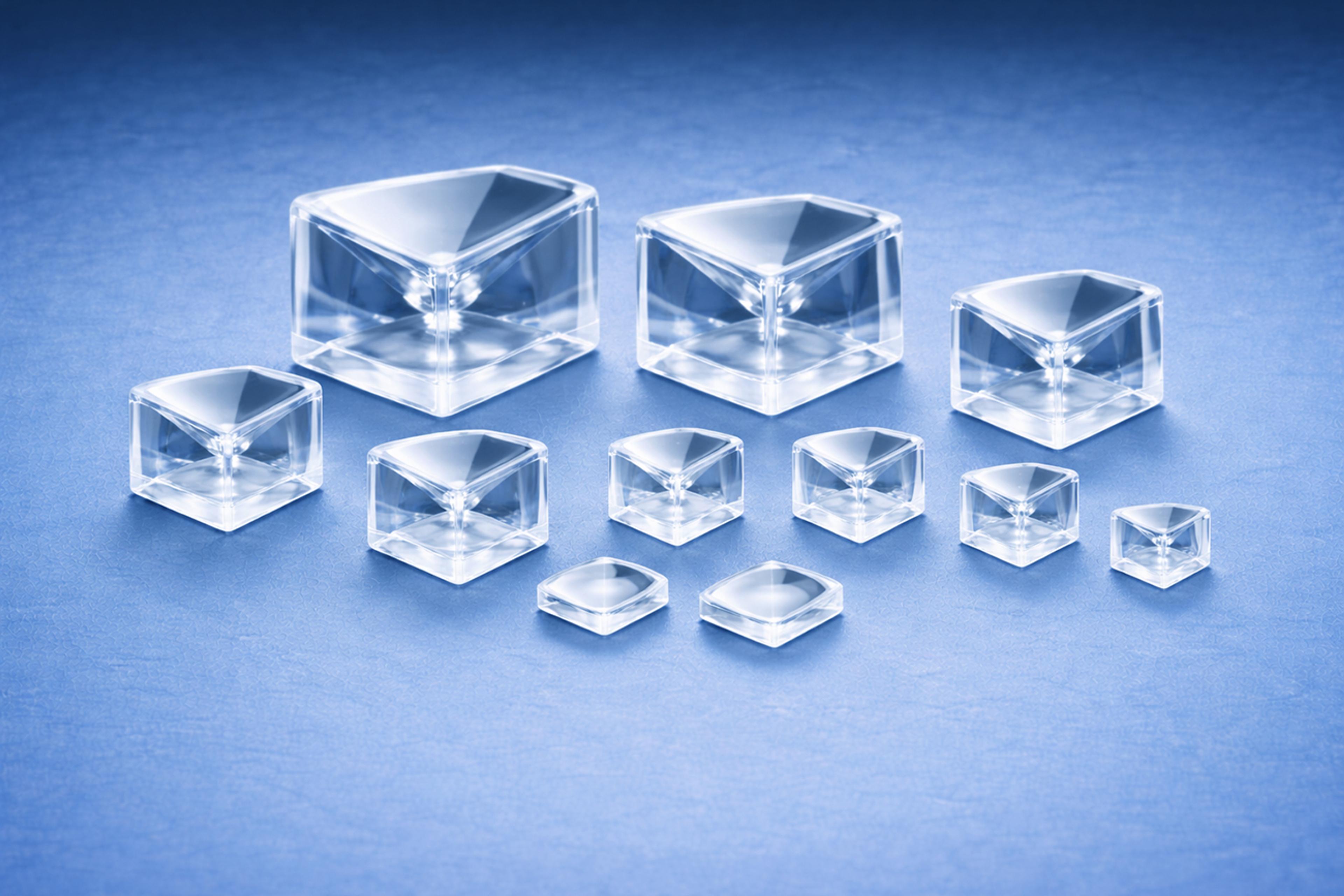
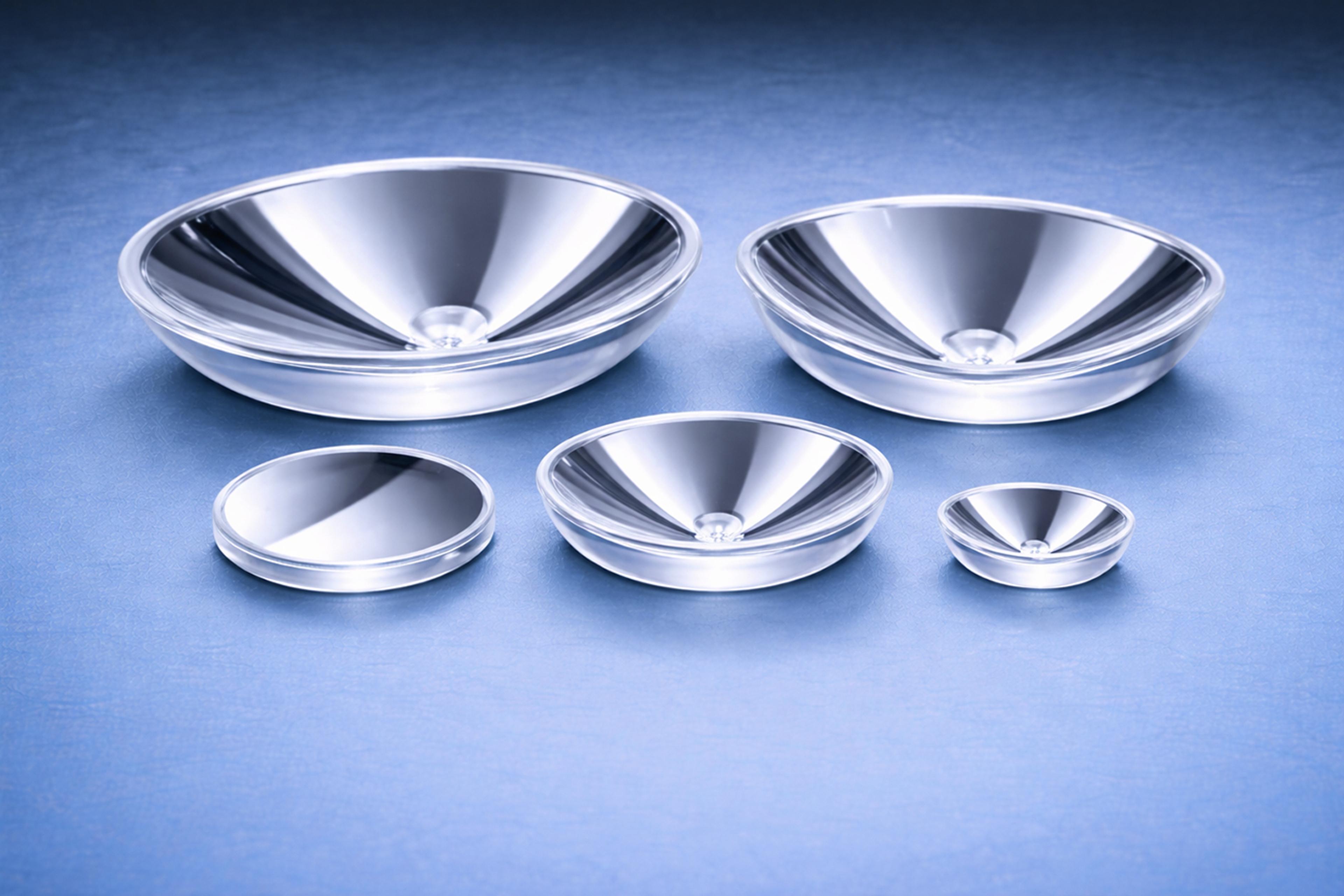
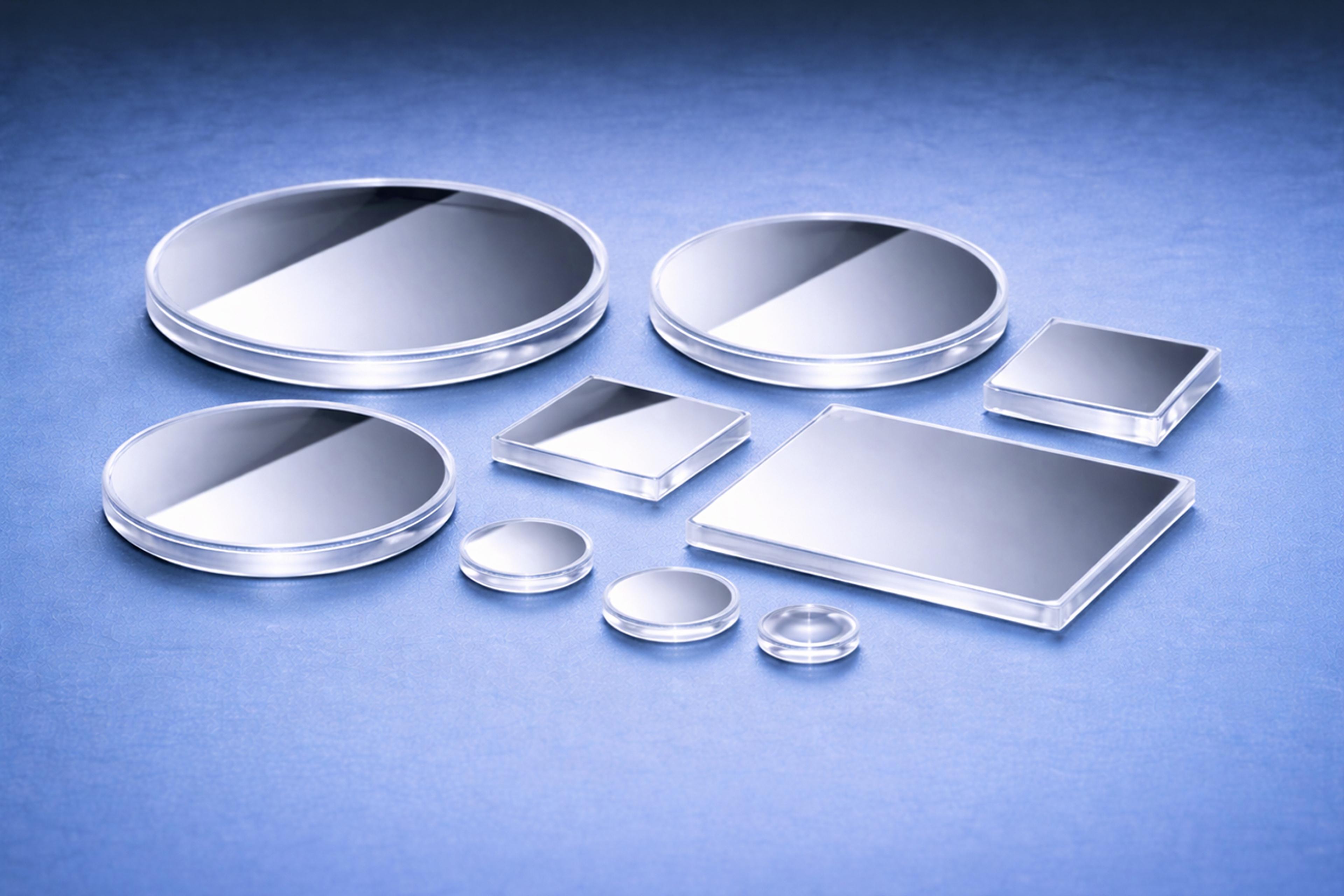
G&H | GS Optics manufactures precision polymer mirrors with diamond-turned or molded surfaces and reflective coatings for imaging, illumination, and defense systems.
Reflective polymer optics use mirror-based geometries to redirect or focus light with precision, durability, and reduced weight. At G&H | GS Optics, we manufacture custom polymer mirrors and reflectors that deliver high performance across visible and infrared wavelengths - ideal for imaging, sensing, projection, defense, and illumination systems. By combining advanced polymer molding, precision diamond turning, and in-house thin-film coating, we produce reflective optics that rival metal or glass mirrors in accuracy while offering substantial weight and cost advantages.
Based on decades of expertise, G&H | GS Optics engineers provide our customers with DFM recommendations to ensure that their polymer optics programs are successful. Using mold flow simulations, we can model how resin will fill the mold during the injection molding process to better position gates, anticipate where knit lines will appear, and locate difficult to fill spots in the mold. G&H | GS Optics specializes in scientific injection molding which is a systematic, data-driven methodology to produce world class polymer optics.
Core capabilities include:
We use optical-grade thermoplastics engineered for reflective performance and coating compatibility:
All coatings are applied using our in-house vacuum thin-film deposition systems to ensure uniform adhesion and surface consistency.
Reflective polymer optics produced by G&H | GS Optics are subject to rigorous quality standards to ensure consistent, reliable performance. Each lens is measured using a variety of metrology equipment to verify dimensional accuracy, surface quality, and refractive characteristics.
To reduce risk after transferring from development to production, GS Optics can conduct a process validation through a combination of installation (IQ), operational (OQ), and performance (PQ) qualifications, ensuring process repeatability and consistent optical performance.
| Standard | Precision | |
|---|---|---|
| Focal length (%) | ±5 | ±2 |
| Radius of curvature (%) | ±3 - 5 | ±2 - 3 |
| Power (fringes) | 10 | 5 |
| Irregularity (fringes / 10mm) | 4 | 2 |
| Scratch / dig | 80 / 50 | 60 / 40 |
| Center thickness (mm) | ±0.1 | ±0.05 |
| Flange diameter (mm) | ±0.1 | ±0.05 |
| Concentricity (mm) | 0.1 | 0.05 |
| Center to edge thickness ratio | 1:1 | 3:1 |
| Surface roughness (Å RMS) | <75 | <60 |
G&H experts can customize products to your requirements.